How Poverty Changes Your Mind-Set
Understanding psychology may be key to addressing the problem.
How Poverty Changes Your Mind-Set
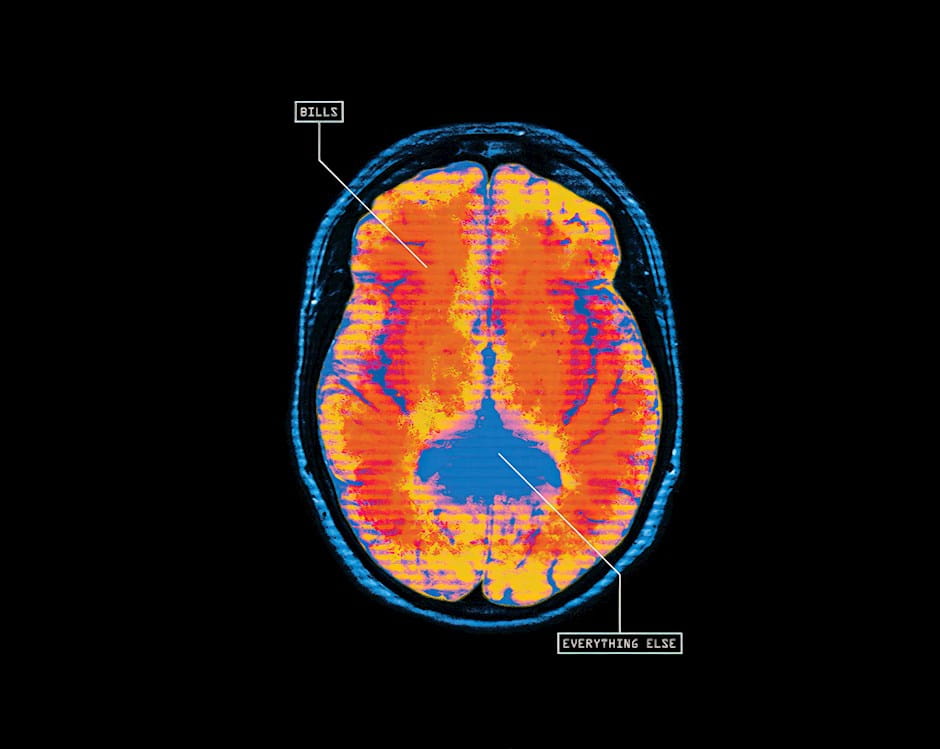
Having money can mean not having to worry about money. But when wealth is scarce, the stress can change the way we think and the decisions we make.
Working through a difficult financial problem produces a cognitive strain that’s equivalent to a full night’s sleep lost, according to a study coauthored by Chicago Booth’s Sendhil Mullainathan.
Research by Mullainathan, Chicago Booth’s Anuj K. Shah, and Princeton’s Eldar Shafir suggests that having fewer resources can cause cognitive fatigue, forcing poorer people to expend more mental energy on things that don’t stress wealthy people. Having fewer resources may lead poorer people to make better financial decisions, but sometimes people are punished for actions that stem from the experience of poverty.
“Some say you really have to understand the broad social structure of being poor, and what people do and don’t have access to. Others say that poor individuals have different values or preferences. We stepped back and asked: ‘Is there something else going on?’”
— Anuj K. Shah
Discover these stories and much more at Chicago Booth Review.
Understanding psychology may be key to addressing the problem.
How Poverty Changes Your Mind-Set
The mental strain of poverty increases the risk of making costly mistakes.
Anuj K. Shah Says We’re Criminalizing the Effects of PovertyThrough their data-driven insights, our researchers are tackling some of the world's biggest global issues. Explore more research from Booth.

Booth researchers are investigating how cultural norms and expectations affect women’s progress.
Why Is the Glass Ceiling So Tough to Crack?
Chicago Booth research explores the role of bias against nonwhite-sounding names in employment.
What Really Goes Into Hiring Decisions?
Booth researchers are exploring what should drive corporate decisions in the twenty-first century.
Should Companies Focus on Profits?The Chicago Approach to business education—Booth’s educational philosophy—will teach you how to turn any business challenge, no matter how small or large, into an opportunity. Learn how our transformative curriculum helps our students to ask better questions and discover better answers. No matter which MBA program you pursue—Full-Time, Part-Time, Executive MBA—you get the same transformative academic experience, the same world-class faculty, the same influential network, the same dynamic community.

Find out how our educational approach will prepare you to think for yourself, challenge the status quo, and ground discoveries in data.
Discover Academic Life at Booth
Our MBA curriculum gives you the skills to transcend trends and solve any business problem. Here’s how.
Master the Fundamentals of Business
Recruit the world’s top MBA students, support academic research, sponsor an event, and more. Our corporate partners have many opportunities to engage with Booth.
Recruit Chicago Booth Talent
Choose from nearly 50 open-enrollment programs worldwide, or create a custom program tailored to meet your organization’s unique challenges.
Executive Education
Positioned at the forefront of the rapidly developing field of behavioral science, CDR is devoted to building a richer understanding of human behavior and experience.
Roman Family Center for Decision Research