
A Data-Driven Legacy
Booth’s Quantitative Marketing and Economics Conference connects scholars, students, and industry leaders around rigorous, economics-based marketing research.
- By
- November 25, 2025
- Marketing
In the late 1990s, the field of marketing scholarship was at an inflection point. Much of the academic research followed the “marketing science” tradition—relying on simplified, ad hoc models to optimize firm decisions around pricing, promotions, and other tactics.
At Chicago Booth, however, marketing faculty were taking a different, more empirical approach. They leveraged models rooted in economics and statistics that could capture consumer behavior and firm strategy with greater rigor.
This empirical, quantitative vision helped shape three Booth initiatives that remain cornerstones of the marketing field today: the James M. Kilts Center for Marketing, founded in 1999 with support from its namesake, a 1974 MBA alumnus; the Quantitative Marketing and Economics journal, launched in 2003; and the Quantitative Marketing and Economics (QME) Conference, hosted for the first time that same year at Booth.
More than two decades later, the annual QME Conference—cosponsored by the Kilts Center—is recognized as one of the premier global forums at the intersection of marketing and economics. It brings together top scholars, PhD students, and industry experts in a rigorous, collaborative setting.
“The conference has had a tremendous impact on quantitative marketing by pioneering a venue with an audience and set of papers from the fields of quantitative marketing and economics,” says Jean-Pierre Dubé, the James M. Kilts Distinguished Service Professor of Marketing. “This multi-disciplinary focus played a seminal role in elevating the impact of quant marketing research into other fields and normalizing this work in various domains of applied microeconomics. It’s now quite standard to see multiple quantitative marketing presentations on the National Bureau of Economic Research’s industrial organization and digitization programs.”
Each year, the insights and research shared at the conference advance academic understanding and influence how businesses—from global tech firms to consumer brands—approach marketing strategy, data, and decision-making.
A New Standard for Quantitative Marketing
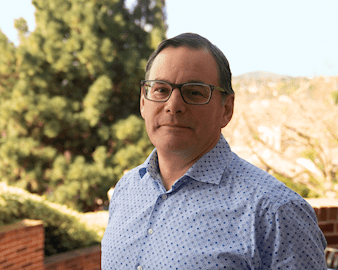
The QME Conference grew directly out of the new journal, created to build community and set a higher standard for scholarship in quantitative marketing. It was founded by Peter Rossi, MBA ’80, PhD ’84, a former Booth professor who served as the Kilts Center’s founding faculty director and is now the James Collins Distinguished University Professor of Marketing, Economics, and Statistics at the UCLA Anderson School of Management.
Rossi and his Booth colleagues envisioned the first conference as a forum that would connect younger scholars and PhD students with leaders in the field to network, hear about the latest research, and get rigorous feedback on their own work. From the start, travel scholarships for doctoral students were part of the model—a practice that continues today—signaling the conference’s role as a pipeline for the next generation of quantitative marketing researchers.
Equally distinctive was the format: a single-track plenary schedule featuring a small number of carefully chosen papers, each paired with a leading academic expert on the topic, who provided an in-depth critique and context. This approach encouraged dialogue and collaboration while setting a new standard for rigor.
“The conference was a smash hit from the very beginning,” Rossi says. “The first conference had about 80 people, which is really quite remarkable.”
Since then, the annual gathering has grown to include nearly 200 participants from 60 academic institutions around the country and the globe, including the Massachusetts Institute of Technology, Stanford University, the Wharton School, Imperial College London, and Goethe University Frankfurt, among others. A virtual option was added in 2021, which helped nearly double the number of attendees.
Much of this growth is also thanks to the Kilts Center, which facilitates academic research and provides programs that support students and alumni with careers in marketing-related fields. The QME Conference aligns with the center’s mission to democratize access to world-class datasets, including ones from Nielsen, NielsenIQ, and TransUnion, which are housed at the center. These datasets have fueled more than 1,200 academic papers and tens of thousands of citations across a wide range of fields, including economics, healthcare, labor, and, of course, marketing.
“At Kilts, we view it as part of our mission to support all quantitative marketing research worldwide,” says Dubé. “The Kilts Center, including its support of the QME journal and co-sponsorship of the QME Conference, has become an invaluable platform to promote marketing research broadly in the social sciences.”
“[The QME Conference] has established a community of scholars that is thriving, that is inclusive, and that will continue to grow.”
— Peter Rossi
Academic Research with Real-World Impact

The QME Conference reflects Booth’s broader intellectual approach to the field of marketing. Drawing from the disciplines of economics, psychology, and statistics, this approach provides enduring ways to understand consumer behavior, pricing, and strategy.
“The theme of the journal and the conference is predominantly research that’s grounded in economics,” says Dubé. “You start with your theory—economics, psychology, maybe sociology. You go to the data to test these theories. Then you get into things like counterfactuals and accountability. Do these policies work? You put this all together: theory, evidence, accountability. That is The Chicago Approach.”
Rossi credits both the journal and the conference with greatly expanding the focus on data-driven scholarship beyond Booth. “The number of high-quality researchers in quantitative marketing has grown dramatically,” Rossi says. “Now nearly all the top schools have a quantitative marketing dimension.”
Many of these schools now collaborate with Booth to organize the conference, and faculty from Duke University, Imperial College London, the University of Rochester, and Tilburg University in the Netherlands serve as QME coeditors with Günter J. Hitsch, Kilts Family Professor of Marketing, and Bradley Shapiro, professor of marketing and True North Faculty Scholar.
In the conference’s early years, topics focused on demand estimation, brand preferences, and competition and innovation. More recent topics have evolved alongside the business landscape, covering subscription models, user privacy and personalization, and LLMs and machine learning. Dubé points out that this adaptability is central to the conference’s enduring value—not just in academia, but in business. “You see more and more applications with machine learning in them, largely because the massive amounts of data available mean marketers are constantly looking for ways to make optimal decisions at scale.”
The research discussed at QME increasingly shapes how major firms such as Amazon, Google, and Meta evaluate advertising effectiveness and design algorithms. “If you don’t use this kind of data in the right way, you’re going to get the wrong answer,” Rossi says. “If you’re a company like Google, these mistakes are absolutely fundamental to whether you do a good job.”
Each year, the conference bestows the Dick Wittink Prize, honoring the best paper published that year in the journal.* The prize is a prestigious honor in the field—the winning paper also tends to be the most cited—and reflects the conference’s commitment to recognizing truly outstanding scholarship.
“Personally, the QME Conference has been hugely important for me,” Rossi says. “It has established a community of scholars that is thriving, that is inclusive, and that will continue to grow.”
*The 2025 Dick Wittink Prize was awarded to Günter Hitsch, Sanjog Misra, and Walter Zhang, MBA ’24, PhD ’24, for their paper “Heterogeneous Treatment Effects and Optimal Targeting Policy Evaluation.” Hitsch is the Kilts Family Professor of Marketing; Misra is the Charles H. Kellstadt Distinguished Service Professor of Marketing and Applied AI; and Zhang, a recent alumnus, is an assistant professor of marketing at the Wharton School of the University of Pennsylvania.

Booth News & Events to Your Inbox
Stay informed with Booth's newsletter, event notifications, and regular updates featuring faculty research and stories of leadership and impact.
YOUR PRIVACY
We want to demonstrate our commitment to your privacy. Please review Chicago Booth's privacy notice, which provides information explaining how and why we collect particular information when you visit our website.