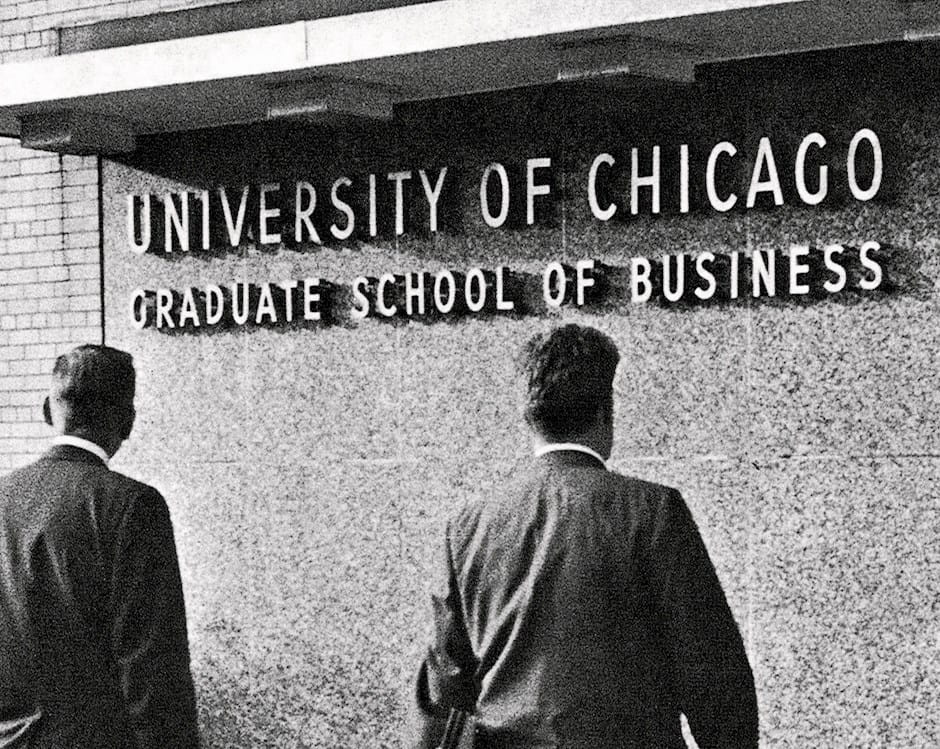
The University of Chicago launched the world’s first executive MBA program in 1943.
Here’s a look at our history of innovation.
Here’s a look at our history of innovation.
The world’s first executive MBA program began at the University of Chicago in 1943, with a group of 52 dedicated students. Then, as now, they sought a transformative education that would propel them to lead in a rapidly changing world, while balancing school with their careers and families. Today, we bring The Chicago Approach to more than 240 students enrolled in the Sokolov Executive MBA Program at our campuses in Chicago, London, and Hong Kong.
Trace our history through more than seven decades of pathbreaking education and discover how the Sokolov EMBA Program accelerated the value of the MBA.
Harry L. Davis: 0:10
The period toward the end of the Second World War was a very important period in education, because there were many returning veterans who were very anxious to get back to work, develop the skills that they needed to make contributions. The view was that there were older executives, typically in their 40s and even in their early 50s, who had never had the opportunity to have a serious business education. We've always reached out to the broader community. There was a view with William Rainey Harper back in 1895 that we should bring the same faculty to people that couldn't afford or didn't have the opportunity to go full-time.
Glenn Sykes: 0:53
The next program came along 25 years after that. It was a risky move to think about this, whether there was going to be a market to do this. The war eventually was going to end, so what happens after the war ends? Is there still going to be a need to train people like that and that method? I think it was the bold thinking that goes back to the founding of this university and continues to create the hallmark for the way that this university is run.
Patty Keegan: 1:21
From the first day that I walked into Chicago Booth, I heard of Bud Fackler. Bud was the director of the Executive MBA Program for many years. He was also a professor in the program and he was very, very loved by all of his students and by other faculty. Bud was one of the original founders of what eventually became the Executive MBA Council, and so that grew into what is now a global council.
Harry L. Davis: 02:03
People have asked me how we ended up beginning to move outside of Chicago and often people want to see a nice clean linear story. We had a desire to have a global footprint and so we analyzed the market opportunities and selected Europe. It really didn't evolve that way. I was in the Dean's Office at the time and my agenda was indication that there were going to be some visiting bankers from Spain and I had no idea what this was. They came into my office and propose what I considered to be a completely outrageous suggestion, which is, we'd like the business school to start a full-time MBA program in Andorra. I must say I was polite, but after they left, I thought this is a really quite absurd idea.
Richard Johnson: 02:52
Harry doesn't give up and he continues thinking about it. He brings lots of people into those conversations, and from those questions and from those discussions have come some really major and amazing innovations in the school.
Harry L. Davis: 03:05
I wondered if we might be able to create the Executive MBA Program using the same faculty, but doing it in a modular format.
Glenn Sykes: 03:14
In the early 90s, it was easier to connect and technology was facilitating global connections, businesses were thinking more about global markets. And we realized that, or it was probably a type of Executive MBA student for whom the opportunity costs of coming to Chicago for an MBA would be really way too high. And the only way we would connect with those students was to make the step that we did, which is to bring Chicago to them.
Deb Fallahay: 03:47
When it was announced that we were going to open a campus in Barcelona, I heard about it by the phones ringing off the hook. It was an announcement that was being broadcast on BBC, and I think that there was an article in the Financial Times, and within minutes of that information being sent out, I had about 30 phone calls.
Harry L. Davis: 04:12
To me, it's an example of the value of keeping the door open, even if you don't have an exact destination or what it might be.
Intan Chen: 04:22
When we entered Asia, it wasn't easy. It was challenging. We worked through those years and I think that because of that first couple of years of experience, it makes us stronger and it also makes us think on our feet about how to solve problem and make sure that everything runs well. I'm quite proud to say that our students were happy with the way that we run the campus. I think the staff deserve the recognition because they work really hard.
Richard Johnson: 05:04
I think it is important that we have a global presence as a research institution, as a business school, where we have a mission to influence and educate leaders. And that's important to do worldwide and the only way to do that really is to be present in those communities. We really wouldn't have the same global reach of our alumni in the same powerful network that we did without presence of the Executive MBA Program.
Harry L. Davis: 05:39
One of the impacts of executive MBA programs in general is that has fast-forwarded the study of business to a larger audience, and particularly to a more senior audience, who are able to make use of the techniques in more serious managerial leadership roles in their organizations. So I think in fact, it accelerated the value of the MBA.
Over the course of 2018, we celebrated the 75th anniversary of the program and its unique impact on the industry. Notable highlights can be found below.

The world’s first executive MBA program enrolls its inaugural class of 52 in a two-year evening program that meets two nights a week at 19 South Michigan Avenue.
The program is “an immediate success story,” according to UChicago professor Walter David “Bud” Fackler, who would later become director of the program. “There was an important market niche to be served,” Fackler added, “and there was a good product presented by a small but excellent faculty.”
1943 - Inaugural Class
The GI Bill―officially the Servicemen's Readjustment Act of 1944―is enacted, providing tuition benefits that send millions of returning veterans to college and low-cost loans that help them launch businesses.
1944 - GI Bill
As the fifth cohort enters, the program has grown by 70 percent compared to its inaugural class, to a total of 81 students.
1947 - 70% Growth
Alumni launch the Executive Program Club to build on the strong bonds within cohorts and stimulate ongoing learning through enduring events like the Business Forecast Luncheon.
1948 - Executive Program Club
The Executive Program Club organizes the inaugural Management Conference to share new thinking, perspectives, and trends in business with alumni. The event becomes a tradition at the business school that continues today.
1953 - Management Conference
The graduating cohort begins a tradition of crowning students in the cohort behind them with propeller beanies and requiring them to adopt a prepared credo.
1955 - New Traditions
Newly appointed dean W. Allen Wallis and associate dean James Lorie evaluate the state of the school and business education in general, then revitalize coursework to emphasize theoretical concepts underlying business management. The result becomes known as “The Chicago Approach” to business education, an approach rooted in rigorous inquiry and intense collaboration.
1956 - The Chicago Approach
The program enrolls its first African American student in the year’s incoming cohort of students.
1963 - First African American Student
Professor Walter “Bud” Fackler becomes director of the Executive MBA Program, a role he holds until 1987.
1970 - Walter “Bud” Fackler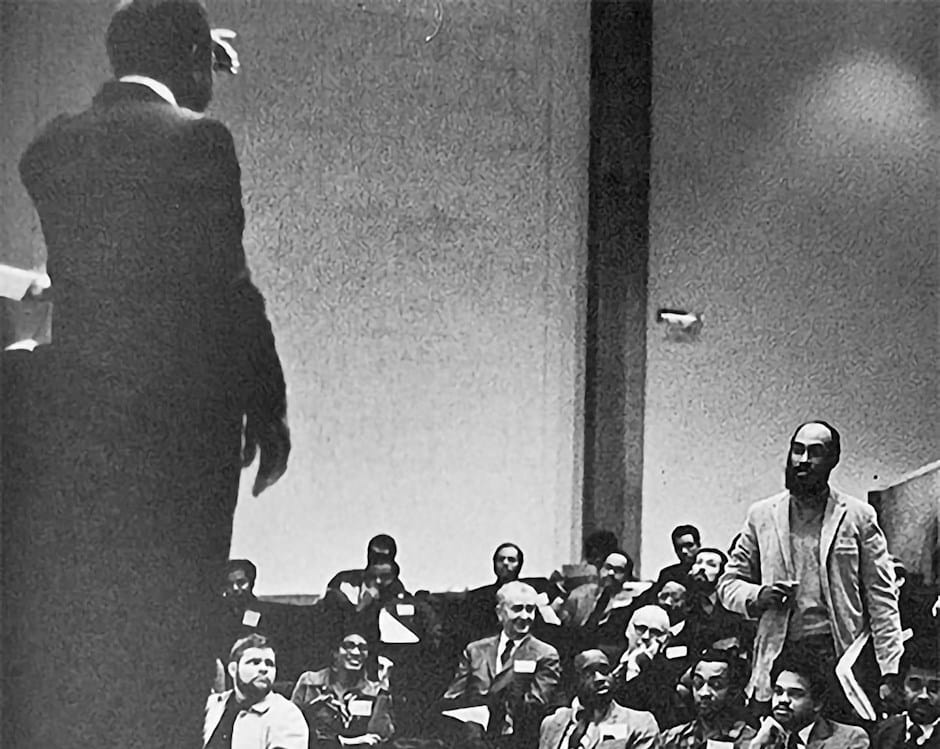
African American MBA students at the University of Chicago conceive and organize the first national conference of black students enrolled in MBA programs.
1970 - Black Students Organize National Conference
Student Martin Richmond completes his degree after flying an estimated 50,000 miles to attend. He moved to New Jersey mid-program, and commuted by air from New York’s LaGuardia Airport to Chicago for almost a year. Another group of five Wisconsin students fly from Appleton to Chicago’s Meigs Field in a Piper Navajo plane piloted by Timothy E. Hoeksema, arriving at 190 East Delaware in time for 9 a.m. classes.
1975 - Frequent Flyers
The Executive MBA Council is founded to share knowledge and best practices among the 50 existing programs. Bud Fackler, who for years had generously advised schools starting up EMBA programs, was a key organizer.
1981 - Executive MBA Council
Bud Fackler receives an inaugural award from the Executive MBA Council. Named in his honor, the award recognizes his contributions to the council and EMBA programs worldwide and is still given today.
1987 - Bud Fackler Award
Longtime program director Bud Fackler dies, inspiring alumni to raise funds that ultimately funded a professorship in his name in 2007. Nearly 800 contribute to what was then the largest pooled gift in the university’s history.
1993 - Fackler Professorship
In June, the business school and Argentaria, a banking and financial services company in Spain, announce the launch of the International Executive MBA Program, based in Barcelona. Deputy dean Harry Davis, a leadership expert, and his successor Robin Hogarth are instrumental in the global expansion to Europe.
1993 - Expanding to Europe
The program moves into the university’s modern new Downtown Center on the banks of the Chicago River, leaving the facility at 190 East Delaware.
1994 - Downtown Campus Opens
The first international Executive MBA Program cohort begins classes at the new campus in Barcelona. The curriculum includes 10 modules over 16 months.
1994 - First International Cohort
The European cohort―50 students from 14 nations―travels to Chicago for course modules with their counterparts. The international joint sessions remain a unique component of the program.
1995 - First Joint International Session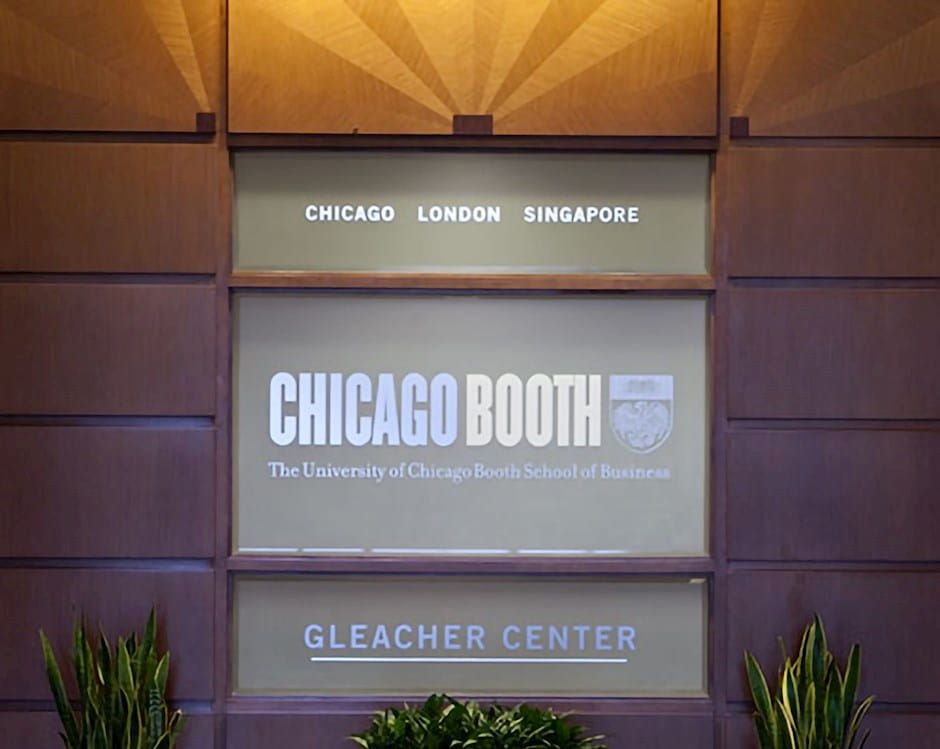
The Downtown Campus is named Gleacher Center in honor of a gift from Eric Gleacher, ’67.
1996 - Gleacher Center Named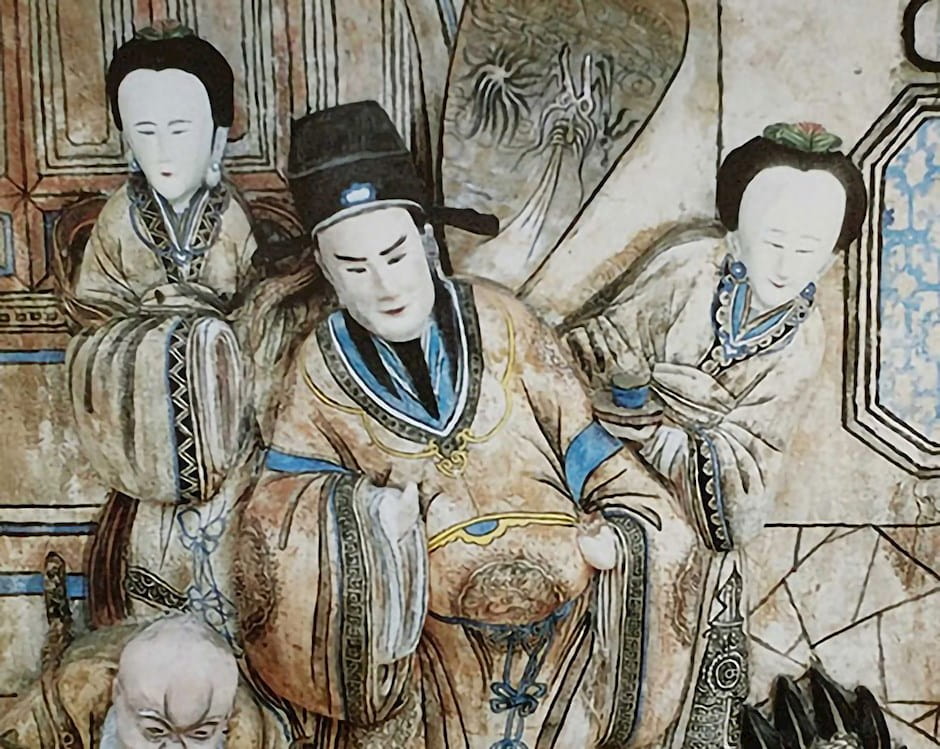
Renovations begin to restore and modernize the historic House of Tan Yeok Nee in Singapore to house the program’s expansion to Asia. Jack Wadsworth, ’63, then chairman of Morgan Stanley Dean Witter Asia Limited and chairman of the W.L.S. Spencer Foundation, and his wife, Bette Sue Pendery-Wadsworth, help defray the cost of modernizing the 115-year-old mansion. Cheng Wai Keung, ’73, chairman and managing director of Wing Tai Holdings Limited, heads the consortium that acquires the building.
1999 - Expanding to Asia
The first Asia cohort enrolls in Singapore, making the school the first US institution to offer an Executive MBA Program on three continents taught by its own faculty.
Along with the new campus and cohort, the school’s long-running Management Conference premieres in Asia. A dinner featuring remarks by US ambassador Steven Green, dean Robert Hamada, and 1993 Nobel laureate Robert W. Fogel is followed by a day of panel sessions and a tour of the House of Tan Yeok Nee.
2000 - First Asia Cohort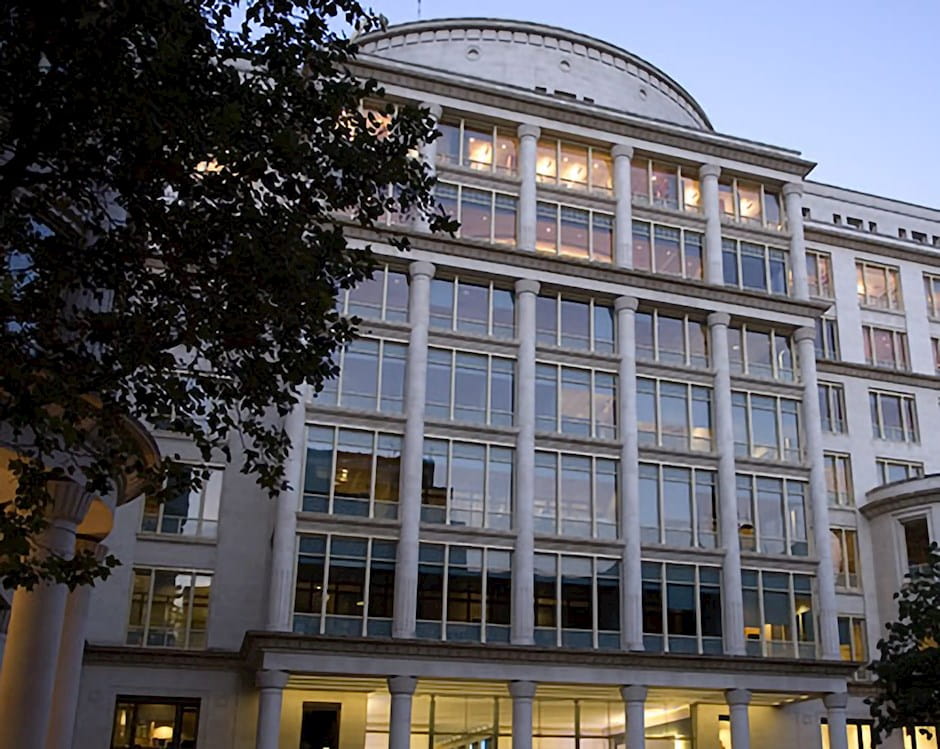
The European program relocates from Barcelona to London and a state-of-the-art campus in the City.
2005 - Relocating to London
Seven recent graduates from the North American program form the Hyde Park Angels, an early-stage investor group, in cooperation with the Polsky Center for Entrepreneurship and Innovation.
2007 - Hyde Park Angels
The school is named in honor of David Booth, ’71, recognizing his unprecedented $300 million gift.
2008 - Booth Gift
The program adopts concentrations in finance, marketing, and strategy. Students also begin participating in a Global New Venture Challenge competition, a unique platform designed to expand the Edward L. Kaplan, ’71, New Venture Challenge to Executive MBA students on our Chicago, London, and Singapore (and later Hong Kong) campuses.
2009 - Curriculum Update
Patty Keegan, associate dean for the Executive MBA North America Program, is honored with the EMBAC Bud Fackler Service Award, recognizing her contributions over 15 years with the program.
2010 - Patty Keegan Honored
The Asia-based program relocates from Singapore to Hong Kong in a move to expand and strengthen the school’s presence and influence across the region.
2014 - Relocating to Hong Kong
The Executive MBA Program partners with the Graduate Management Admissions Council (GMAC) and other leading business schools around the world to create the Executive Assessment Test, an exam developed specifically for EMBA candidates.
2016 - Executive Assessment Test
Tandean Rustandy, ’07, establishes the Rustandy Center for Social Sector Innovation with a $20 million gift, endowing Chicago Booth’s hub for research and programming that tackles complex social and environmental problems.
2017 - Rustandy Center Established
The degree program pioneered at UChicago 75 years ago is flourishing worldwide. The industry’s Executive MBA Council reports 300 member programs across more than 30 nations today.
2018 - Executive MBA Programs Flourish
The Executive MBA Program in Asia will move into the Chicago Booth campus at the University of Chicago Center in Hong Kong.
Photo of The Hong Kong Jockey Club University of Chicago Academic Complex | The University of Chicago Francis and Rose Yuen Campus in Hong Kong
2018 - New Hong Kong Campus1 of 1
Percentage that the program grew in its first five years
70%
Industries represented among our students, who represent 48 nationalities
22
First and only US business school with permanent campuses on three continents
1stChicago Booth Magazine
75 Years at the Forefront
Inquiry Required How Do You Manage Millennials
Executive MBA Admissions Blog
“Booth’s Impact on the Executive MBA Industry”
“Amid an Unpredictable Journey, A Steadfast Approach”
“How Do You Price a Change in Confidence?”
“Lessons in Leadership: Stare at the Landscape before You Charge Forward”
Evening MBA and Weekend MBA Admissions Blog
“5 Things I Learned from an Evening with Harry Davis and Linda Ginzel”

“One of the impacts of the Executive MBA Program is that it fast-forwarded the study of business to a larger audience, who were able to make use of the techniques in more serious managerial and leadership roles. I think, in fact, it accelerated the value of the MBA.”
—Harry L. Davis, Roger L. and Rachel M. Goetz Distinguished Service Professor of Creative Management
Join us at an admissions event to get an inside look of the Sokolov Executive MBA Program at Chicago Booth.
Attend an Executive MBA Admissions Event
In this section, you will find information about our approach to education, admissions tips, career insights, our global reach, and our closely connected network.
Executive MBA Stories
Sign up to receive updates about the Sokolov Executive MBA Program at Chicago Booth.
Introduce Yourself