
Would You Trust a Machine to Pick a Vaccine?
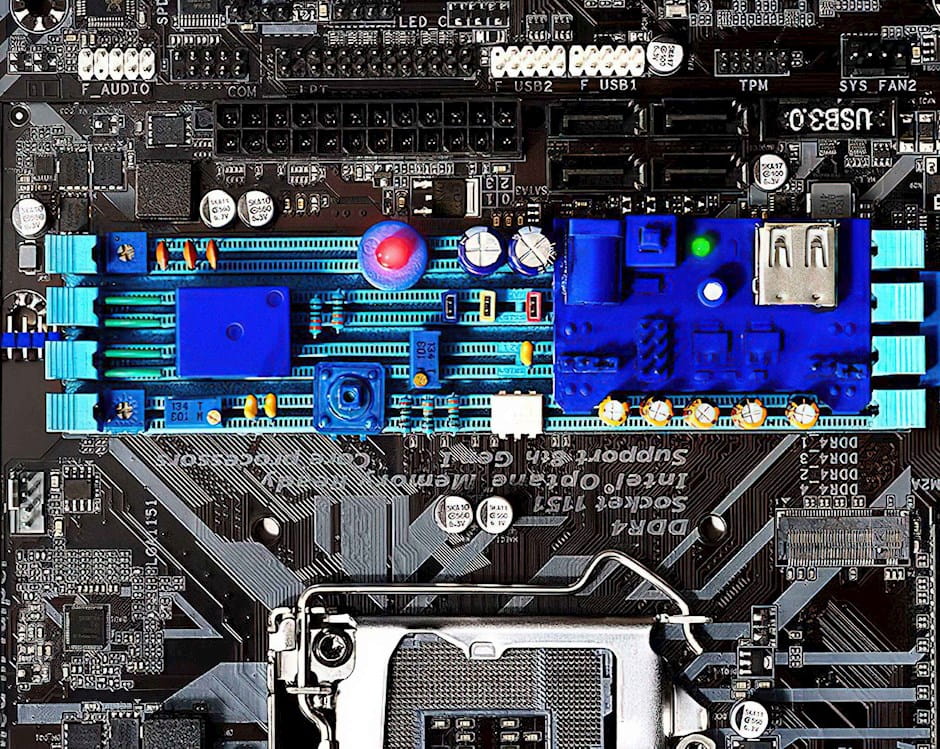
Machine learning is being tasked with an increasing number of important decisions. But the answers it generates involve a degree of uncertainty.
{PubDate}
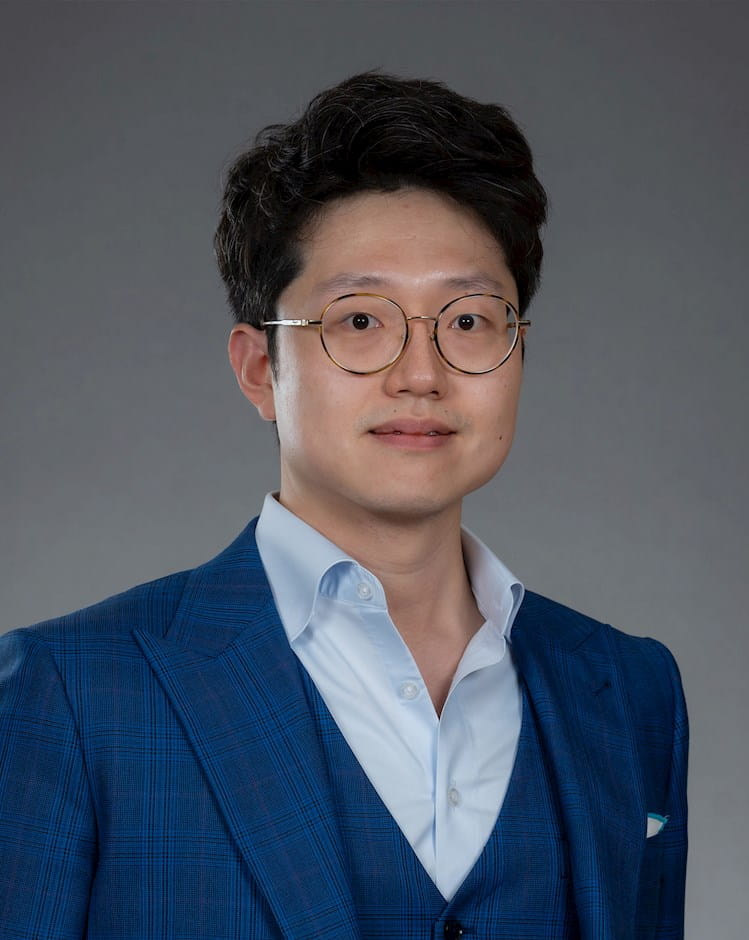
Tengyuan Liang is Professor of Econometrics, Statistics, and Applied AI at the Booth School of Business, and the JP Gan Professor in the Wallman Society of Fellows at the University of Chicago. He studies the foundations of modern machine learning — why generative models produce faithful synthetic data, why overparameterized models generalize beyond classical limits, and when machine predictions merit trust in consequential decisions about business and policy.
His contributions to the interpolation regime, generative models, and causal inference have shaped research across disciplines, appearing in the premier venues of statistics (Annals of Statistics, JRSSB, JASA, Biometrika), economics (Econometrica), and machine learning (JMLR, COLT).
A unifying thesis drives Liang's research: the deepest questions about AI — what it can generate, what it can infer, why it generalizes — are fundamentally distributional questions. The mathematics of distributions — their geometry, dynamics, and robustness — is the language Liang develops to answer them.
Liang holds a B.Sc. in Mathematics from Peking University and a Ph.D. in Statistics from the Wharton School, University of Pennsylvania, where he received the J. Parker Bursk Memorial Prize and a Winkelman Fellowship. He was awarded a National Science Foundation CAREER Grant for his research program on statistical learning paradigms beyond the limits of classical theory. He has served as Associate Editor for the Journal of the American Statistical Association and for Operations Research, on the Editorial Board of the Journal of Machine Learning Research, and on the Senior Program Committee for the Conference on Learning Theory.
Beyond Booth, he has been a Visiting Professor at the Cowles Foundation at Yale University, a Global Faculty in Residence at The University of Chicago Hong Kong Campus, and a Research Scientist at Yahoo Research in New York.
Machine learning is being tasked with an increasing number of important decisions. But the answers it generates involve a degree of uncertainty.
{PubDate}
Evaluating the performance of machine-learning tools isn’t always easily done.
{PubDate}