


A glimpse into alum Satyajeet Salgar’s (MBA’ 07) creative and unconventional career.
- By
- September 10, 2025
- Center for Applied Artificial Intelligence
From the sleepy town at the base of Mount Kilimanjaro, Moshi in Tanzania to the bustling streets of Pune, India, the life of Satyajeet Salgar was destined to be winding and unconventional. So, too, has been his career path playing pivotal roles at some of the largest international tech companies and refining products that have become staples of modern life.
Since his time in Chicago Booth classrooms, Salgar (MBA ‘ 07) has embraced curiosity and serendipity, guided by a relentless drive to create meaningful products and experiences in the world of tech, media…and now AI.
Having watched the evolution of the technological sector from before the internet boom to the emergence of ever-evolving artificial intelligence tools, Salgar synthesized his insights on how AI is shifting the way he thinks, works, and even parents.
Satyajeet found his first role at a small startup by happenstance: the company’s cofounder was an admired professor whose company was looking for help with a project. Eager to strive as an emerging software engineer, Salgar spent a few years learning the ins and outs of business, as well as the ups and downs of an early stage startup. But a core inner voice reared its head—echoing his father’s advice---and Salgar set out to earn the MBA that would later help synthesize his passion for technology and newly developed business skillset.
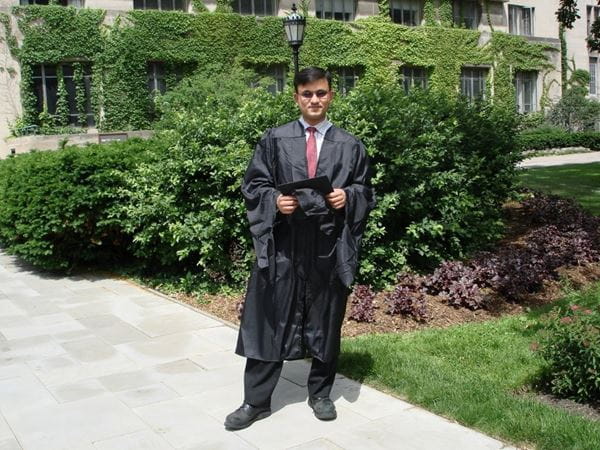
Freshly minted MBA in hand, Salgar joined Google with the intention of eventually pivoting to a smaller company. 18 years later, his lasting impact spans projects across the Google ecosystem. From Google Play Games, Payments, Ads, Google Search, and, with a few detours over to YouTube including YouTube Live Streaming and Shopping. Salgar has seen many platforms evolve from prototype into everyday household essentials. Now, he heads up an Applied AI team as Director of Product and UX.

At the heart of his management style are questions like “Why do these products matter?” and “How do we get people to form an emotional connection to these tools?” The latter spurred a delightful initiative to plant ‘easter eggs,’ celebrate sports team wins, and recognize cultural icons as a way to enhance Google Search. Now familiar to many, the world-famous search engine incorporated Google Doodles, the mini graphics that highlight holidays, culture, historical figures, and more. “I’ve always enjoyed thinking about creators and how to support the immense and diverse swathe of content that exists,” Salgar said.
Fundamentally shaping Google’s Knowledge Graph, an enormous database of information about nearly anything that powers Google Search answers, remains one of his favorite projects alongside managing the Search experience for media of any and all content types—think TV shows, movies, music, books, and games.
And finding clever and unique ways to engage with innovative technologies is a practice Salgar also brings to his personal life.
In his own home, Salgar encourages his kids—aged 8 and 11—to interact with AI. To get daughter more engaged with her first-grade math class, Salgar turned to AI for help creating princess and unicorn-themed practice problems. “Making addition and subtraction exciting can be really challenging,” said Salgar, “but having access to custom questions that play into my daughter’s interests has been a game-changer.”
Evening story time has also been revolutionized by generative AI. “For a while I was prompting AI to write poems and stories with images for my daughter,” he said. Tools like Storybook by Gemini, a tool that churns out custom storybooks for children are creating infinite possibilities for worldbuilding and the subtle insertion of life lessons or principles in stories. “My daughter started noticing slight differences in the AI images or faces of the characters from the story, so it’s still a work in progress,” Salgar laughed.
On a near-daily basis, what is possible in the realm of AI unfolds and evolves in unexpected ways. This exponential growth is, in part, owed to the abundance of unique ideas brought forth by the diverse collection of entrepreneurs and innovators entering the field. And while a plethora of ideas and perspectives will be critical for advancing the new technology, Salgar stressed the importance of depth over breadth, at least in the immediate future. For instance, by developing models that are highly optimized to execute successfully on specific tasks, rather than able to work somewhat effectively across a wide range of tasks or fields.
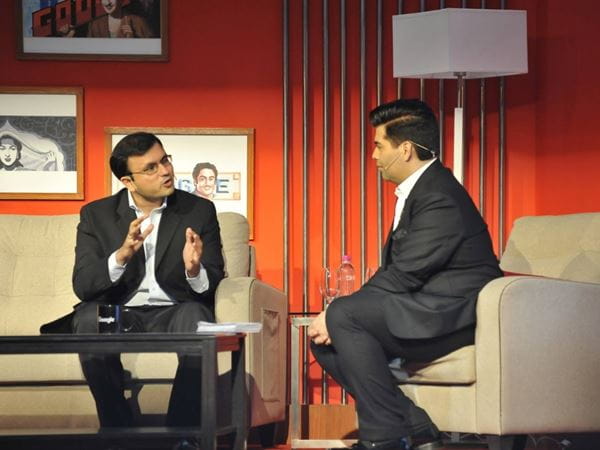
“I think we’re in the process of building technology that truly blows us away,” he shared. A new set of tools is on the horizon, like Google’s Astra, a multimodal assistant prototype that sees what you see and hears what you hear and is able to provide individualized help through life’s various challenges. Essentially, Astra is an assistant that can give advice, do quick business calculations, or even coach a quick bicycle fix.
Though still in the protoype phase, Salgar brought his family on board to help tweak and test Astra’s features in their own home. So far, Astra has been more successful than Salgar at characterizing the clay creatures made by his kids—what he thought were dinosaurs, Astra correctly identified as anteaters. “I’m amazed at how observant, accurate, and attuned it can seem in its early stages,” he said.
For Salgar, the omnipresence and versatility of AI assistants has the potential to democratize intelligence. Assistants can intervene with tips and insights for those without decades of life experiences or specific education and training. “Some of our new tools give everyone these empowering superpowers in daily life by helping navigate murky or nuanced social dynamics, or bringing objectivity and expertise to any situation” Salgar shared.
AI is being folded into the more private parts of life, with therapy and companionship being among of the top uses of ChatGPT in 2025. Importantly, there’s still room for human agency and intervention in shaping how AI goes about weighing in on life’s deciding moments. These tools can be trained according to an individual’s moral code or personal measures of success. Using these new tools will require careful discernment as the long-term impact of its involvement in daily life remains to be seen.
Deep into his career, Salgar makes it a routine practice to reflect on novel ways to approach his work and business as his toolset evolves. “It might seem counterintuitive, but soft skills and the ability to influence people may now actually matter dramatically more,” said Salgar. “At Booth we pride ourselves on rigorous analytical thinking. But as AI democratizes the availability of high quality analysis, our focus may need to shift to focus on who the data represents and what story is being told with the data, and its impact on real lives.”
Imagine being the first person to get a computer or to use a spreadsheet. What creative problem-solving was made possible with those tools, now considered commonplace in business operations? Now, apply that same thinking to the realm of AI, Salgar suggests. The post-MBA trajectory is undergoing a transformation; staying open, flexible, and optimistic and prioritizing leadership and entrepreneurial skills has become crucial.
“At Booth, my model of the world drastically improved—I learned to go from zero to one hundred on nearly any problem and to feel confident in uncharted territory,” Salgar shared. He reflected on his time entering the job market during an economic downturn: “It’s so valuable to maintain a sense of optimism and wonder amidst uncertainty.” His sage perspective holds true now more than ever.
Salgar’s continues to shape the future of AI at Booth through his leadership as a member of the Center for Applied AI Advisory Council.