Capitalisn’t: Who Should the Fed Answer To?
- January 28, 2026
- CBR - Capitalisnt
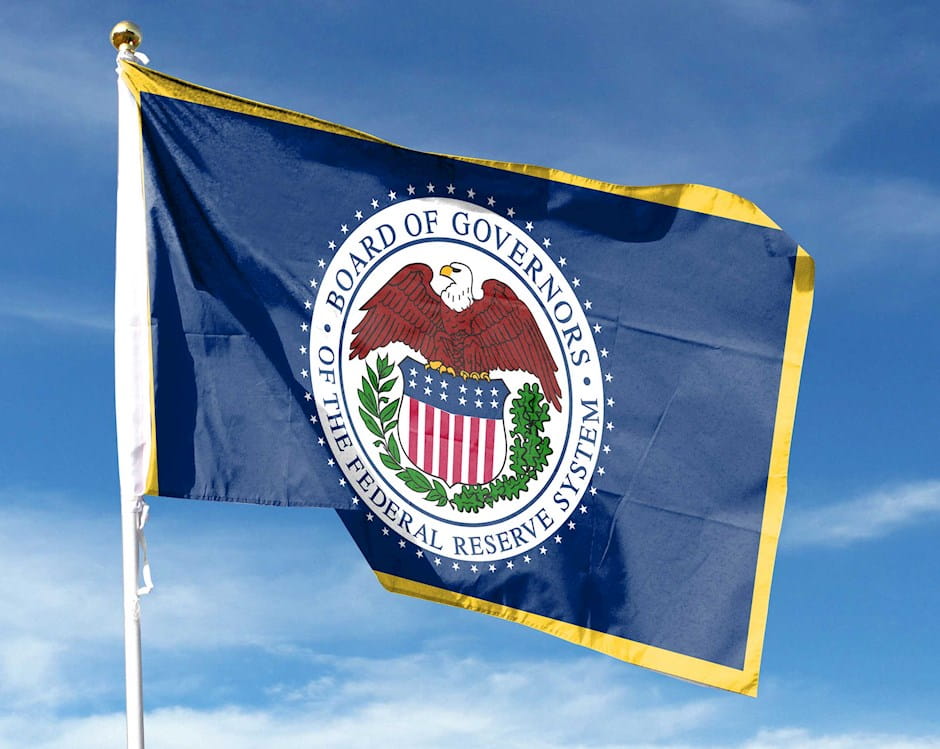
Is the Federal Reserve’s independence a pillar of democracy or a convenient shield that allows elected officials to duck their responsibilities? On this episode of Capitalisn’t, we confront a shift in Washington after the US Department of Justice served subpoenas on the Fed earlier this month.
Joining the conversation is former Deputy Governor of the Bank of England Sir Paul Tucker, who complicates the definition of central bank autonomy. If monetary policy is a “latent instrument of taxation,” should it be shielded from the King—the executive branch—and reclaimed by the legislature? We explore the provocative argument that the Fed has become dangerously wary of its relationship with Congress, acting as a self-governing entity rather than a delegated authority.



Sir Paul Tucker: Were Fed independence repealed today, long-bond yields would go up, I think, quite a lot. The currency would fall, and probably equities would fall. The rise in interest rates on average in the future would hurt people. The rise in inflation expectations, and then, eventually, the rise in inflation, or the deep recession to avoid the rise in inflation expectations would hurt people. Actually, quite quickly, people would say, "Well, actually, an independent central bank is quite a good thing, isn't it?"
[music]
Bethany McLean: I'm Bethany McLean.
Phil Donahue: Did you ever have a moment of doubt about capitalism and whether greed’s a good idea?
Luigi Zingales: And I’m Luigi Zingales.
Bernie Sanders: We have socialism for the very rich, rugged individualism for the poor.
Bethany McLean: And this is Capitalisn’t, a podcast about what is working in capitalism.
Milton Friedman: First of all, tell me, is there some society you know that doesn’t run on greed?
Luigi Zingales: And, most importantly, what isn’t.
Warren Buffett: We ought to do better by the people that get left behind. I don’t think we should kill the capitalist system in the process.
[music]
Bethany McLean: The episode you're about to listen to was recorded before this week's stunning news about the Justice Department serving subpoenas on the Federal Reserve. Luigi and I are going to have an additional conversation to discuss that news and what it means. However, we think that this news actually makes this episode all the more relevant.
[music]
Bethany McLean: The Federal Reserve is the most powerful economic institution in the United States and arguably the world. It can raise your mortgage rate, move the stock market, throw millions out of work, or rescue the financial system, all without a single vote from the public. We call that independence.
Luigi Zingales: The economic justification for independence is very simple. If politicians run monetary policy, they goose the economy before the election and leave us with inflation afterwards. We handed that power to technocrats.
Bethany McLean: Here's the twist, or one of the twists. This independence can protect the Fed from politicians, at least arguably until recently, but not necessarily from Wall Street. In fact, Luigi, you've argued that the more independent the Fed is from voters, the more dependent it is on Wall Street. Why do you say that, and why would that be?
Luigi Zingales: Because at the end of the day, when you are a bureaucrat, you want to have an objective function. If you're not accountable to the political system, then you're accountable to your career incentives. The career incentives are naturally in the direction of pleasing Wall Street because when you step down, you're going to either work for Wall Street or give speeches to Wall Street, which is very profitable activities that people do. Once you remove something as big as monetary policy from democratic politics and you leave it in the hands of technocrats, people start to feel shut out. That opens the door for a populist leader to say, "Why are these unelected bankers running the economy? Put me in charge, and I will tell them what to do."
Bethany McLean: Not surprisingly, this is exactly what is happening under President Trump. In this fight between Trumpian and independence, [chuckles] our concerns about capture and democratic accountability have been lost. To bring them back into focus, we decided to invite Sir Paul Tucker, former vice president of the Bank of England and author of several books, including Unelected Power, where he argues that what he calls delegation with insulation is legitimate only under strict conditions, clear goals set by elected politicians, limited tools, no open-ended missions, and strong transparency and accountability.
[music]
Luigi Zingales: Welcome to Capitalisn't, Sir Paul Tucker. You were a civil servant. This term is often used in Europe, but rarely in the United States. Can you explain to our listeners what a civil servant is and why this term is not very much used in the States?
Sir Paul Tucker: It's a very interesting question. Actually, I wasn't a civil servant. I was a public servant, but I wasn't a civil servant. In terms of what you're getting at, you want some permanent officials that live by norms of fidelity to the elected government of the day, who know their way around. You absolutely definitely want some elected officials at the top and around the political parts of any of the great departments who can provide direction to those below them, and they will follow.
If that is not the case, if there is obstructionism within the machinery of government in Washington, that would be a very bad thing indeed. You do get elements of that. British people are amazed with certain things that have happened in the United States over many decades, where a president has given an order to the military, say one about Guantanamo Bay, and it seems not to be carried out. This is a strange thing that should be-- How can that happen?
Look, that the norms of governance in Washington have been eroding for quite a long time is widely recognized. The interesting thing is it's social norms that keep these things alive. It's a kind of social, public, or professional crowd sanction. You can't do that. It's never quite the letter of the requirements because, however, even if the letter of the Constitution said, "Obey this Constitution," there's a norm in the background that says, "Obey the sentence that says obey the Constitution." There's always something outside the Constitution that is doing a lot of the work.
Bethany McLean: Do you think that your thinking on these, let's call them explicit norms and implicit norms, plays a role in how you think about central bank governance and whether it is or should be different in the US and the UK?
Sir Paul Tucker: I think the argument for an independent monetary authority in the United States, the UK, Germany, France is essentially the same. It's to do with separation of powers. That an absolutely fundamental tenet of our shared system of government is that taxation should be decided, approved, whatever, in the elected assembly. That's the first step.
The second step is the monetary levers are always, and unavoidably so, inherently, implicitly levers of taxation, either by unleashing surprise inflation or surprise deflation, or actually even up to a point with expected inflation as well. Since the monetary instrument is, latently, an instrument of taxation, the last people that should control it is the head of the executive branch, is the king.
The third point to make is that for hundreds of years, and basically during modernity, legislatures solved this problem via the gold standard. After that, after we're off the commodity standard, well, then what's there to do? You could have a committee of the legislature do it, but that's actually not practically feasible because it's quite a time-consuming task, monetary policy, and legislators have other things to do.
Delegating to a central bank emerges as the solution of the following form. It is a delegation to a creature of the legislature. Now, this creature of the legislature, the central bank, has this instrument that, latently, is an instrument of taxation. The legislature must put constraints on it so that it's not abused in that way. To go back to the second step in the argument, for the executive to take control, really is to usurp the authority of the executive legislature.
I once said this to some US constitutional scholars, and they said, "No, but the president would still have to go back to Congress to get spending approval." I looked at them. I'm going to exaggerate this only a little. I looked at them in bewilderment. "You think if you've got the money, you need to go and get approval for spending?" That relies on the norm of doing that. Well, if that norm was holding, so would the norm hold that the president shouldn't be controlling monetary policy. Actually, that conversation with those constitutional scholars was an interesting illustration of constitutional scholars not frequently enough thinking there must be something going on outside the Constitution itself, a set of norms.
Luigi Zingales: Tell me if I'm wrong, but in the UK, the prime minister sends a letter called a "mandate letter" every year or so, in which defines clearly the macro-objectives. Of course, you have a general mandate, but they specify 2% inflation versus, in the United States, there is a dual mandate of the Fed. In fact, what represent price stabilities defined by the Fed itself is not determined by the executives.
Sir Paul Tucker: In primary legislation, the objective is laid down by Parliament, and it's lexicographic. Achieve price stability, and subject to that, do things that don't cross the economic policies of the government of the day. Then the legislation says, "We parliament delegate to the executive treasury, the power to flesh out what price stability means." It should do so, fire a remit that it gives to the Monetary Policy Committee of the Bank of England.
One difference from the US is, in the US, the primary legislation sets the Federal Reserve essentially a dual mandate. The UK thing is achieve price stability and, subject to that, do business cycle stabilization. In the US, it's achieve price stability and do business cycle stabilization and trade off one against the other to the extent that you need to. The second part of this. There are more things to be said, but the second part of your question that I'm going to pick up on is, so the Federal Reserve decides its own target.
Do I think that's good? No. I doubt whether the legislature would want to delegate to the executive branch power to set Fed objectives. If it did make that delegation and if some executive eventually abused that power, because Congress tends to be sclerotic, it would find it very difficult to undo it, whereas a parliament undoing an executive in London is not very difficult. I don't think it's infeasible, but I think it's unlikely Congress would ever delegate to the executive branch a power to set the remit.
I think the Federal Reserve could have done more to socialize its remit review with Congress and with the executive. I think it should prioritize going to Congress, given that on my argument, and I think my argument is the true argument, it is a creature of Congress. I think the Federal Reserve, over a very long time, has tended to be somewhat wary in its relations with Congress, and I think that's a mistake.
Bethany McLean: Thinking about this through the lens of the Fed in particular, although I suppose the same could apply to the central bank, but with less leniency, is the Fed's short-term goals to preserve its own independence perhaps at odds with what would ensure its long-term survivability in its current form? In other words, if you think of the Fed as an independent entity with life of its own, are its short-term goals and its long-term goals congruent?
Sir Paul Tucker: It shouldn't have a goal of preserving its own independence, on my view. There's also a tactical issue here. We haven't touched on this yet. Of course, there really are important welfare arguments for having an independent central bank. It's not just a constitutional argument. Were Fed independence repealed today, long-bond yields would go up, I think, quite a lot. The currency would fall, and probably equities would fall, and the rise in interest rates on average in the future would hurt people.
The rise in inflation expectations and then, eventually, the rise in inflation or the deep recession to avoid the rise in inflation expectations would hurt people. Actually, quite quickly, people would say, "Well, actually, an independent central bank is quite a good thing, isn't it?" That being the case, if I'm right about the violence of the reaction to a loss of independence, then a central bank doesn't have to defend its independence too much. It just has to do its job well.
This is quite unlike other areas of independence. If you stripped independence away from some other bodies, it might be harmful in the long run. It might not be, but it might be harmful in the long run, but people would only discover in the medium to long run. If Federal Reserve independence was broken as we are speaking, the costs of it will be apparent by tea time. That's a hell of a thing. I think for reasons of principle, central bankers should not strive too hard to defend their independence. They should explain the utility of the independence, but not strive to defend it. It also shows why they probably don't need to defend it. They don't need to protest too much.
Luigi Zingales: What is your view on the power of the executive actually to remove the chairman of the Fed or the chairman of the central bank? I'm not asking you a legal question in the United States because I know you're not a legal scholar. I'm saying from a theoretical point of view. For example, if a chairman of the Fed is doing terribly on inflation, should a president be able to remove it?
Sir Paul Tucker: Let me come to your question in just a moment. It's a very important one. There was a little qualification that you made. "I'm not asking you the legal question," you said, "because you're not a lawyer." This is a very American thing. In the UK, of course, trained lawyers are given great weight in these views. Formally, they're given the greatest weight because they made the final decision. It's not assumed that others can't have a view on the law.
Indeed, the problem with the American way of thinking about this is it implies that the only body that is responsible for maintaining the Constitution is the Supreme Court, whereas, actually, it's the duty of everybody. That's not cheap shot against the United States. I think this is a slight problem. The number of times people say to me, "Oh, we're not lawyers," and then I'll go on to discuss just the economics of it.
It means that people, Luigi, in your profession, haven't thought enough outside of Kydland and Prescott and Barro and Gordon about what central bank independence is. To your question, which is an important one, there are three indices of independence. This is a positive comment, not a normative comment. They are, first of all, that the executive branch should not be able to issue a direction that says, "Oh, by the way, you've got an interest rate meeting today. Set the interest rate at some number."
That's the first, no directions. The second is, can't sack the Central Bank's policymakers, not just the chair, but the others as well. Because if you could, well, that would be a route to undermining the first. The third one is some budgetary autonomy. If you have to go to the legislature for your money frequently, once a year, you'll turn out not to be independent. I think were a president, any president, a widely popular president, to sack a Fed chair for no reasons, well, then that would diminish confidence in the independence of the Federal Reserve.
It would diminish confidence in the credibility of its commitment to keep inflation low. Let's be clear. In those circumstances, it would be more difficult to stabilize the business cycle. Something that isn't said enough about the period after the global financial crisis, and I mean in the first two or three or four years. I'm going to make an assertion, but I think it's an assertion that many people would agree with.
Had central banks not been independent in late 2008, 2009, and when interest rates were being cut sharply, and QE was being introduced, it seems to me extremely unlikely that an elected government would've been able to provide that amount of monetary stimulus. Because what would've happened is that long-bond yields would've risen because people would've thought they were going to abuse their capacity to do that. I say this because there are people on the political spectrum that think that central banks are part of a neoliberal kind of program or even conspiracy. I don't think that.
I think that the people that care most about jobs and marginalized the poor in our societies, the capacity of the central bank to provide overwhelming monetary support in dire circumstances without people losing confidence in price stability is an extraordinary and an extraordinary valuable thing that we did not revisit. It's been pretty terrible since the global financial crisis in lots of ways, don't get me wrong, but we did not revisit the Great Depression. The reasons for that are, I think, to do with lessons learned from that period about the design of monetary policy institutions and the conduct, the policymaking of monetary policy institutions.
Bethany McLean: Then, I see that point of view that you just expressed as being a bit at odds with the idea that the central bank should be more constrained, because what the central bank did in the financial crisis and then, again, in the pandemic was to stretch the limits of its remit in ways that elected officials did not entirely understand they were doing at the time. How do those two things square together? If you want the central bank to have the power to do that, but at the same time, a central bank with unconstrained power is not a great thing, how do those things fit together?
Sir Paul Tucker: Okay, I see the point of the question. I don't think I wholly agree with it. First of all, maintaining monetary stability, price stability isn't just about inflation. It's about avoiding deflation as well. The implosion of the banking system was destroying money. What central banks did is offset a collapse in broad money with some more narrow money. Now, you then make the point, but did they do things that were stretching their boundaries to do so?
There are two things here. Were they stretching the boundaries in law, and were they stretching the boundaries in terms of a general understanding of how monetary policy can be conducted? Let me start with the UK. We were quite clear, and everybody else is quite clear, that the Bank of England had the authority to buy government bonds that had been doing so for a few hundred years. Nor did we think it was hugely unconventional.
In the 1980s, in a period that was called "overfunding," but we shouldn't get too distracted by this, the government and the Bank of England over-issued government bonds so as to depress the pace of increase in broad money. This is during the period of monetarism, which was largely mad. It was called overfunding. Mervyn King and I said to each other, "Well, what we're going to do with QE, it's underfunding," but had it been used before in quite that way? No.
We did two things. We talked openly to Parliament about it. Before that, we agreed there was an exchange of letters between the governor of the bank and the Treasury secretary, or as we call that office, the Chancellor of the Exchequer, which had two things in it. First of all, that they would indemnify the Bank of England against losses and get the profits, but that was merely a way of publicizing what was true anyway and is true here.
The second thing that was part of that exchange of letters, they would not change their government debt management strategy to partly undo the effects of QE. In other words, if we were buying long-term bonds, they wouldn't issue more long-term bonds. They agreed with that. The details don't matter. What's behind that is a thought, this is perfectly within our vires. It's unfamiliar. In a world where Parliament tells the Treasury to set a remit, we need an instant exchange of letters with the Treasury, which we had.
The governor talked to me a number of times the weekend when he was discussing that with Gordon Brown and Alistair Darling. That was then incorporated into the next annual update of the remit. Actually, during the financial crisis, I think not around QE, there was a mini-accord between the US Treasury and the Federal Reserve about the use of its balance sheet during that period. As far as I know, that has not been updated. I think it should have been.
I think COVID is completely different, actually. COVID is a misuse of powers rather than an abuse of powers. By that, I mean the Biden administration makes a huge fiscal injection, and the Federal Reserve carries on adding stimulus at the same pace it would do otherwise. This is absolutely extraordinary that the shock that comes both requires the Biden stimulus and requires the Federal Reserve to carry on as though nothing's happened. There must be a shock that precisely lands it on that.
I think the criticisms during that period of the Biden fiscal stimulus were misdirected. They should have been directed at the Fed. I think the Biden administration's attacks on the people criticizing its fiscal stimulus were misdirected. They should have just said, "Well, the macroeconomic implications of this are for the Federal Reserve." This came during a period where-- and I don't enjoy saying this, but it was a big change.
A Treasury secretary had got used to talking about monetary policy and the conduct of monetary policy. If you go back to the 1990s, that didn't happen. I was what you would call chief of staff to the government of the Bank of England in the late '80s, early '90s, and so have been watching these things for a long time. It was quite novel to have a Treasury secretary, fantastically expert on monetary policy as it happens, offering a commentary on monetary policy.
I don't really understand what an Overton window is. To the extent that I've got a little grasp of it, these little things shift the Overton window. If central bank independence is meaningful, then this isn't-- just as I said earlier, the central bank shouldn't go around being neurotic about its independence. Everybody else in government holding positions of great power needs to conduct themselves in recognition of that independence, unless they wish to weaken it.
During the same period, talking about inclusive growth was a mistake. It's not a mistake because inclusive growth doesn't matter. It plainly does matter. It's a mistake because central banks don't have an instrument for generating inclusive growth, only aggregate short-term demand growth. If they were to give instruments to affect distributional issues, I think the response of many people, including me, would be, "Hold on. Isn't that why we elect people?
Luigi Zingales: In the United States, it seems that the chairman of the Fed does not really pay for his mistakes because you said that Powell made a big mistake in 2021 with the inflation or the stimulus. Then, in 2023, there was a major banking crisis that was a failure in supervision. We have not seen any accountability on any of the two counts. In fact, after the first, he was renewed as chairman of the Fed. After the second, nobody, except maybe me, blame him for that. It seems like almost in polite circles, you cannot raise criticism of the chairman of the Fed.
Sir Paul Tucker: I don't think this is to do with polite circles. I do think it is a big issue. I think you are basically right. It goes back to the question about remit, which I'll come back to, if I may. I'd like to start with the supervision. This was the failure of SVB, alongside other large regional banks had been exempted from various supervisory and regulatory requirements, including resolution planning.
When they were consulting on whether to do this, the Federal Reserve, and as it happened, as the FDIC, had been told by various people that this would be a mistake and could lead to wholesale deposit run on the regional banks. If it did, because there were others that had similar liability structures, there could be a degree of contagion. I know that because I was chair of something called the Systemic Risk Council at the time, which included Paul Volcker and Jean-Claude Trichet.
I signed a letter. Sheila Bair, a former chair of the FDIC and many others, I signed the letter from the SRC that effectively said that, but we weren't the only ones who said it. The then-vice chair of the FDIC said it in a speech in Washington, and they went ahead. I do think it matters that there has been very little debate about that. I think it's probably the most egregious supervisory set of mistakes that I can remember pretty well anywhere that affects stability.
The problem is here, is that if you sack the person or they resign after testifying to Congress or to the Parliament, well, then you start to undermine independence. I think the remedy actually is to tweak the regime, to require more transparency, to realize, I think in the US's case, I think in the wake of the post-COVID mistakes, I think the stance from Congress should have been, "Well, you can't be left entirely free to make these regime changes of the kind that you made. We are going to put some constraints around your regime refuse in the future."
Then, of course, you get to the problem. To the extent that Congress tried to do that in law, it would, A, tie itself up in knots while it was trying to do so. If it wrote a law that wasn't terribly good, it would find it horribly difficult to amend it, which is very different from a parliamentary system. I think the point about accountability can't quite be about the individuals, unless the individuals have been egregiously negligent or whatever. I think it has to be about how can we, the American people, and their elected representatives within our system of government, set up something that is a little bit more flexible to ensure proper congressional oversight and constraints around the Federal Reserve?
Luigi Zingales: I have a very simple proposal that every time the chairman of the Fed invokes the systemic exceptions in which they expand the deposit insurance, he should tender his resignation at the same time because, to some extent, you arrive at the crisis because of lack of proper regulation ex-ante. Also, you want to make it difficult to use the systemic exception. The systemic exception comes with the resignation of the chairman.
Sir Paul Tucker: I haven't thought about that, and I'm not going to think about it out loud now. I have thought about something else, which is in the same ballpark because there's accountability of the Federal Reserve in the circumstances you're describing. There's the accountability of bankers and non-bankers that end up getting emergency help. I would prefer a system where everybody that runs these large maturity mismatches has to sign up for the discount window. If ever there are circumstances where somebody hasn't signed up for the discount window but needs to use it, and the government and the Fed decide together that they should use it, then all the bosses of the firm concerned should be banished from financial commerce for the rest of their biological lives.
Luigi Zingales: One last question. Suppose you were king for a day, the king of America for a day, what would you change in the institutional structure of the Fed to make it more legitimate?
Sir Paul Tucker: I don't think one should have a king for a day. Certainly, my country doesn't have a king for a day, or it hasn't had since the early 17th century.
Luigi Zingales: You have prime ministers for a day.
[laughter]
Sir Paul Tucker: Well, he or she would have to go to Parliament. Even Mrs. Thatcher had to go to Parliament, and Mr. Blair, too. I think the chairs of the Fed should get around the country more and be more visible around the country. Whenever I've said this to Fed people, they say, "We have regional Fed presidents that do that." I don't think that's enough. I think the people of America are entitled to see the most powerful person in the Federal Reserve in the neck of the country. I think the chair of the Federal Reserve, and this has been changing a bit, should be on television a bit more. Governors of the Bank of England go on television.
There used to be, and I'm sure there still is, a strong norm that don't compete with the politicians. That's a fuzzy line that it's possible to cross, and it's important not to cross. The people need to know who you are, particularly the number one officeholder. When things go horribly wrong, they say, "Well, who is this person?" Yet, at the same time, I believe that in the big crises, the presidents should front up more. These things are not inconsistent. Can I say one final thing, Luigi, that you haven't asked about, and I thought you might?
Luigi Zingales: Absolutely.
Sir Paul Tucker: There are some people around the place who are saying, "Well, Fed independence for monetary policy has to be maintained, but it should really be taken out of regulation and supervision." The Federal Reserve is inalienably the lender of last resort. Create another central bank, and it will be the inalienable lender of last resort. You do not want a lender of last resort that doesn't know anything about banks.
Luigi Zingales: [laughs]
Sir Paul Tucker: The UK tried that. Supervision and regulation were taken away in 1997. I want to choose my words carefully. Parts of the Bank of England struggled during 2007 in ways that were probably harmful to the country and the world. I think it would be a terrible, terrible thing for the American people and, in fact, for the world for the US to try that experiment. I think this trope of when you talk about democracy as an experiment, get over it. You've had it for nearly 250 years now.
Whereas taking supervision out of the Federal Reserve and a regulatory role would be an experiment, and it would end in tears, and it would end in more fiscal bailouts. The people on the libertarian right, not only them, that argue for this stripping of the regulatory supervisory role, the banking role away from the Fed, that they would hate the eventual outcome even more than they dislike the current state of affairs, which is not to say that there aren't really big improvements to be made on that side of the Federal Reserve. We have touched on some of them in this conversation.
The final thing to say, if I may, Luigi, is that financial stability is now part of national security. The great winners from the global financial crisis are based in Beijing. It was a confidence-boosting moment for them. It enhanced their reach around the world, partly because the Western capitals were distracted, partly because the Western system was discredited. Those of us that are deeply committed to liberal democracy, constitutional democracy, a democratic republic, whatever the three synonyms, the last thing we need is another grave financial crisis.
It is insufficiently understood that the Federal Reserve headquarters is actually an important element of United States leadership in the world. I really don't think enough people in Washington appreciate how important the Federal Reserve is, how important Federal Reserve credibility is to the credibility of the dollar. I think debates about Fed independence should be seen in that context, and I do not have great confidence that the Supreme Court will be able to find its way through all of this in a sufficiently principled way.
[music]
Advertisement: If you're enjoying the discussions we're having on this program, there's another University of Chicago Podcast Network show you should check out. It's called The Pie. Economists are always talking about The Pie, how it grows and shrinks, how it's sliced, and who gets the biggest share. Join veteran NPR host Tess Vigeland as she talks with leading economists about their cutting-edge research and the key events of the day. Hear how the economic pie is at the heart of issues like the aftermath of a global pandemic, jobs, energy policy, and so much more.
[music]
Bethany McLean: Luigi, the really new thing that I learned is that among economists, actually, this idea of how free the Fed is from political influence has been debated for a long time, and the door is opening on that more and more. The point you made about the Fed not being free from influence from Wall Street, I haven't seen studied by economists. Has that been as well? I guess, what do you think of that first point?
Luigi Zingales: I don't think that there's much interest in economists discussing about the capture by Wall Street, in part because it's admitting that they themselves are captured. When I, at least, raise the fact that somebody like Janet Yellen, who is a wonderful economist, and I think was a good chairman of the Fed, or chairwoman of the Fed, and a good Secretary of Treasury, but thanks to the fact that she was appointed to the Treasury shortly after she was in the Fed.
We learned that she earned $8 million giving speeches in the year following her position as a chairwoman of the Fed. There is nothing wrong about giving speeches, being paid for speeches. The question that I raise, imagine she had a very aggressive policy that, for example, did not bail out banks in Wall Street. Would she be so welcome in giving speeches at Wall Street? If the answer is no, I find it defying gravity that an economist can think that this potential reward on the margin wouldn't affect her decision.
I don't want to pick on Janet Yellen. I'm just saying any economist, but the only reason why we choose Janet Yellen is because we have a disclosure on how much she made, okay? My definition of an economist is somebody that thinks that $8 million on the margin should affect decisions because you believe that money and incentives matter. If you are a doctor, you are free to think whatever you want. If you're an economist, I think you're bound to believe that. Most of my colleagues don't believe that, so that's the perplexing part.
Bethany McLean: That's really interesting. Certainly, anecdotally, that does make some sense of what we've seen from the Fed in the decades since I've been covering the markets because, certainly, we saw it from Greenspan's Fed. We saw that through presidents with whom he was not aligned politically. I think we've seen it from every Fed chairman since then, by which I mean an adherence to Wall Street.
It's not just that they stand to make money from giving speeches or from being close to Wall Street or have better career opportunities after they leave the Fed. It's that so much of the health of our economy rests on the stock market now that they almost are victims to the success of the stock market or captives of the success of the stock market. No Fed chairman wants to be the person who cratered the stock market and therefore caused another depression of our financialized economy. I think our very reliance on a financialized economy has also created that dependence.
Luigi Zingales: This is a much more recent phenomenon, the dependence on Wall Street. I think the dependence on Wall Street goes back to Greenspan even before so many depended on the stock market for their retirement. Certainly, that only accumulated or increased the importance of that. The other part that we don't want to forget is that the Fed has an important role as a supervision authority. That's where the capture is more dangerous because you are afraid to really, to use a technical term, piss off people on Wall Street as a result. Not to mention that after 2008, there was a reform.
Before, you had the presidents of the various Feds were elected by or appointed by a board that included all the major bankers. This is still the case. It is the board, but they don't have the voting power in the decision to elect a board chairman of the various Feds. In the New York Fed, you have the JP Morgan CEO and various other people on the board of the Fed. Speaking of the influence, you are making those Fed officials independent from politicians, but talking to businesspeople. What kind of businesspeople? Every board meeting. Have you ever heard the term "greenhouse effect" for Supreme Court justices?
Bethany McLean: No, I haven't.
Luigi Zingales: Oh, you'll love that. Actually, it's coming from a journalist, Linda Greenhouse, that was specialized in treating the Supreme Court. People were saying that, in the past, the Supreme Court was drifting left when they were going to Washington. Why? Because they were living in Washington and were constantly harassed by Linda Greenhouse with their articles. They were moving left as a result of the social pressure.
I can tell you that in Europe, the fact that the central bank of Europe is in Frankfurt and is not in Paris or, God forbid, Rome, changes dramatically the environment because the pressure that they receive is from the German press and the German environment, rather than being the French press or the French environment or the Italian press and Italian environment. The fact that the Fed, at least the president of the local Feds, are embedded in the business environment plays a huge role.
Bethany McLean: Yes, and I guess one other way to measure the Fed's power and its hold, in some ways, on our economy is that even though one of the largest institutions to fail in the financial crisis was Citigroup, a regulated bank. Certainly, a lot of the problems came out of the regulated banking sector and out of Wall Street, which even though at that time was regulated by the SEC, the Fed also was in there talking to people all the time, the Fed still somehow managed to emerge from the financial crisis with more power rather than less power [chuckles] unlike many other regulatory authorities. I think some of that shows that it's a two-way street. There's also the Fed may be captive to Wall Street, but there's very little incentive anywhere to anger the Fed either.
Luigi Zingales: Yes, you said correctly. Not only with more power, but with impeccable reputation because the Fed did do a lot to rescue the situation after the facts, but honestly did nothing to prevent the facts. [laughs]
Bethany McLean: Right. It was a situation in part caused by the Fed. When the Fed gets all the credit for being the hero in that situation, I always thought it was interesting that that was the way that the narrative was told. There was a lot of effort to blame the SEC. I think it was because blaming the SEC detracted from any blame that could accrue to the Fed. It was interesting. It was on the part of a lot of economists who were overly eager to blame the SEC for the financial crisis because, that way, they could say the Fed was perfect. Anyway, we digress a little bit.
Luigi Zingales: No, but wait a second. You actually made me think one thing. Remember, Tim Geithner, who was first the Fed and then the Treasury, was very fond to say, "When there is a fire, you have to put out the fire. You don't have to look for the arsonist." [chuckles] Of course, I'm exaggerating a bit. If you are the arsonist, the last thing you want is to look for the arsonist, right? [laughs]
Bethany McLean: That is true. Did Tucker have a clear sense to you of what we in the US should do, what it is we're getting wrong, and what would be a better way forward?
Luigi Zingales: Yes. My reading of what he said is that he does believe that Congress should play a more active role in mandating and specifying the goal the Fed should follow, but certainly does not want the president to be so influential in monetary policy. It's an interesting nuance because most of the people who opposed Trump on that dimension are people who want a total independence of the Fed from anything.
While Paul Tucker recognizes the importance of having a political mandate for the Fed, because the Fed shouldn't basically go on its own, in part because it might be captured by Wall Street. In general, if the Fed is too much seen as a technocratic institution, it eventually will lose political support. The backlash will be even worse. What he thinks is that there should be a very clear mandate from Congress on what to do, and then leave the Fed independent on how to do it.
Bethany McLean: Yes. I thought his point about how this situation allows elected officials to duck their responsibility is really, really interesting because this fig leaf of independence also allows politicians to say, "Oh, it's the Fed," as if they have no control over it. Given the importance of monetary policy in our world, that is a dereliction of duty, in a sense, on the part of elected politicians, right? The ability to say that this really important thing is happening, "But not my fault, not my problem. I don't have any control over it," whereas in reality, probably exerting control through back channels, and you'd rather just have it be explicit.
[music]
Bethany McLean: Luigi, what was the first thought that went across your mind when you saw the news that the Federal Reserve had been subpoenaed?
Luigi Zingales: That we went down one step in how banana republic the United States is becoming. I refuse to think that this is just about interest rates because either Trump is stupid, and I don't think he's stupid, or it's something about much bigger than interest rate. If you wanted interest rate lower, there were a more subtle way to nudge the Fed to do that. By using the sledgehammer, he all but ensure that the next meeting will not cut interest rate because you have to prove the opposite.
Why is he doing this? He's doing that to prove that he has absolute power. This is a power-grab move to scare everybody. In a sense, we are worse than the Soviet Union because you can be attacked, criminally attacked, criminally indicted for resisting to Trump. That's basically the message. The impact that this has through the institutions, through firms is enormous.
I just heard that a bunch of firms were afraid to show up at an academic seminar about immigration because the journalists were there. Why? It's because they don't want to say in public that they are in favor of more immigration because they are afraid of Trump retaliation. I think that this is not just an attack to Fed independence. It's an attack to the integrity of the US system.
Bethany McLean: Maybe in this case, Trump has finally gone too far. You're already seeing some signs of that. There is pushback against this, broadly speaking, in a way that some of his previous actions have not registered. I think it's because people do recognize how much all of this matters. You decrease faith in the Federal Reserve. The cost of American debt goes up. The dollar goes down. That ends up impacting all of us in a way that is really devastating.
Luigi Zingales: Yes, but look at it. You did not see the market collapse. You didn't see a lot of people revolting. Yes, you had central bankers writing a letter, et cetera, but this is within a small group of intellectual elite. Imagine a second in which you had President Obama doing something like this. I think you would have seen part of the conservative down the street with guns to say that this is a takeover. "We need to protect America. We need to do this, we need to do that." In the grand scheme of things, I think that-- I don't want to say this went under silence, but it's not as dramatic as it should be.
Bethany McLean: That does beg a question. Why do you think the market didn't react more?
Luigi Zingales: I think because at the end of the day, they think they're going to get from Trump more than Trump is going to cost them. It's a very cynical calculation, but all this idea that the market protects institutions, et cetera, et cetera, no. The market protects the brands of the shareholders. If the shareholders expect to receive more than it's going to cost them, they're going to be happy.
Bethany McLean: Okay. Well, that's an argument, though, for the US stock market, and I might agree with that. What about the lack of reaction in terms of global investors to US debt or the dollar? Why has the reaction not been more pronounced? You would have thought that if something like this had happened that interest rates would spike and the dollar would plunge. I think there was some reaction. I actually need to check this, but not as much as one might have expected.
Luigi Zingales: This is the big advantage of a monopolist. When you add a leak in some of the credit scoring agencies, like TransUnion, et cetera, you saw the market price go down a little bit, but then go back up right away. Why? Because you have no alternative. They have such market power that you can't go anywhere else. I think that the same is true with the US dollar and the US Treasury. The US dollar is the international medium of exchange and is very difficult for anybody to go anywhere else. At the end of the day, if you want to save assets, you're going to invest in US Treasury. What is the alternative?
Bethany McLean: In that sense, does the lack of reaction say as much about the state of affairs around the globe as it does about what's happening in the US?
Luigi Zingales: Absolutely. I think that President Trump can get away precisely because there is this vacuum, this uncertainty. At the moment, this needs for US dollars. This is dangerous because it doesn't create a sufficient pushback to stop this deterioration. We're going to wake up a moment with a country with much, much weaker institutions, and going back is much more difficult.
Bethany McLean: I wanted to ask that. Is there any historical analogy? You're obviously an expert on much of this, including on Italy. Is there any historical analogy that would argue that the lack of an immediate reaction doesn't mean a slow degradation?
Luigi Zingales: Oh, absolutely, in the sense that, historically, the markets were seen as a way to provide an immediate feedback for something that has long-term consequences. In many institutional choices, we don't have a market that immediately give a feedback. That's a problem because you don't pay the immediate cost for stuff that, in the long term, is very negative. This monopoly situation of the US in the world weakens this reaction. Also, this prospect of great wishes through some AI boom is anesthetizing even the stock market. We lack a powerful response to institutional degradation.
Bethany McLean: Is then there a larger conversation here about the lack of market response and how problematic that is? Is there a time in history where the market also hasn't responded? Maybe, I think. Actually, I don't know, but maybe the advent of World War II might be one of those times where the market didn't tell us immediately that. I'm not sure about this. I wonder, actually. It would be really interesting to look at gigantic world-changing events and whether the market reaction actually was a predictor of the importance of something. That does, in a really fascinating way, challenge this idea that the market is a barometer of what's happening in the world.
Luigi Zingales: I think that the market is very good at measuring small things. It's not very good at interpreting catastrophic changes. I had a student who did this very interesting dissertation about the nuclear risk during the Cold War. The market, it was pretty good at interpreting this nuclear risk in a cross-sectional variation. Cuban Missile Crisis exploded, for example. The market went down.
Interestingly, places that were located next to nuclear missiles where the Soviets will attack first, or companies located there went down more than companies located away from there. As you know, New York was one of the major points of attack. Also, there were some places in, whatever, Dakota, where the United States stole some important nuclear capability, and they would be obliterated by a nuclear war.
What is interesting is that after the end of the Cold War, they released all the estimates they had of a nuclear war. At the time, it would not have wiped out humankind, only killed half of it or something like that, but the remaining half would have been alive. Now, the point is that the market was very good at the cross-section but was missing completely the risk. The market went down, I think, 5% that day, when the probability of a nuclear war was substantial.
The, actually, ultimate killer for me are the fact that the market did not get it right if you have an enormous probability of dying tomorrow, but then if you don't die tomorrow, then it's business as usual. You should see a very funny yield curve, right? Because the interest rate between today and tomorrow, you want to drink more champagne. If I know I'm going to die tomorrow, I'm going to sell some of my bonds and drink more champagne.
Bethany McLean: Good champagne, yes, definitely.
Luigi Zingales: Of course, the most expensive champagne. You should see a very high yield in the short term, and then going back up to normal after that. None of that took place during the Cuban Missile Crisis. The point is, the market is not very good at making dramatic forecasts, where you don't really have a good scenario. What will happen after a nuclear war? God only knows, right? Would the US bond market still function? Will electricity still function? What are the things we like the most under that situation? This is a really, really difficult question. I don't think that the market takes those possibilities very seriously until it's probably too late.
Bethany McLean: That's actually fairly dismaying in terms of the wisdom of the crowd being reflected through the markets, and also in terms of just how sanguine we should be about current events, given the lack of market reaction. In other words, if you are inclined to take comfort in the lack of market reaction and say, "All right. Well, maybe this is okay. It actually doesn't really mean anything at all."
Luigi Zingales: I'm sorry to say you're right. [laughs]
Bethany McLean: I didn't want to be right. [chuckles]
[music]
Matt Hodapp: Capitalisn't is a podcast from the University of Chicago Podcast Network and the Stigler Center in collaboration with the Chicago Booth Review. The show is produced by me, Matt Hodapp, and Lea Ceasrine, with production assistants from Utsav Gandhi, Matt Lucky, Sebastian Burka, Andy Shi, and Brooke Fox. Don't forget to subscribe and leave a review wherever you get your podcasts. If you'd like to take our conversation further, also check out promarket.org, a publication of the Stigler Center, and subscribe to our newsletter. Sign up at chicagobooth.edu/stigler to discover exciting new content, events, and interviews.
Your Privacy
We want to demonstrate our commitment to your privacy. Please review Chicago Booth's privacy notice, which provides information explaining how and why we collect particular information when you visit our website.