The Equation How AI Can Make Smarter Predictions
- May 28, 2025
- CBR - Artificial Intelligence
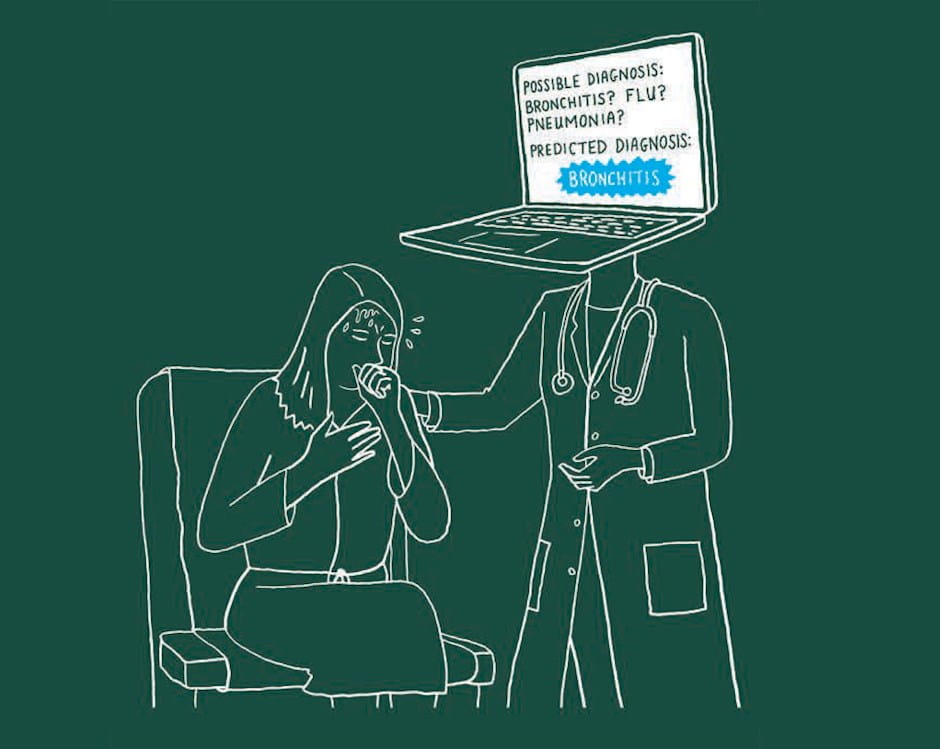
Artificial intelligence can be overconfident, making predictions or statements that turn out to be wrong. A team of researchers that includes Chicago Booth’s Veronika Ročková came up with a solution: Give AI a way to evaluate and calibrate its own uncertainty, allowing a user to decide how much to trust a prediction.
For example, imagine using AI to help diagnose a patient’s illness. The researchers’ method builds a “tree” from past cases whose final diagnoses are known, grouping those cases into “branches” and “leaves” according to shared features such as a fever or cough. The AI assesses possible diagnoses for the new patient, calculating a score to reflect how well each prediction fits the symptoms. Meanwhile, the method assigns the new patient to a leaf and considers how well AI did at diagnosing other cases from that same group. If the AI was largely accurate, it can confidently give a few possible diagnoses. But if it wasn’t, it should issue a wider range of diagnoses. To learn more, read “Is ChatGPT Confident About Its Answer or Just Bluffing?”
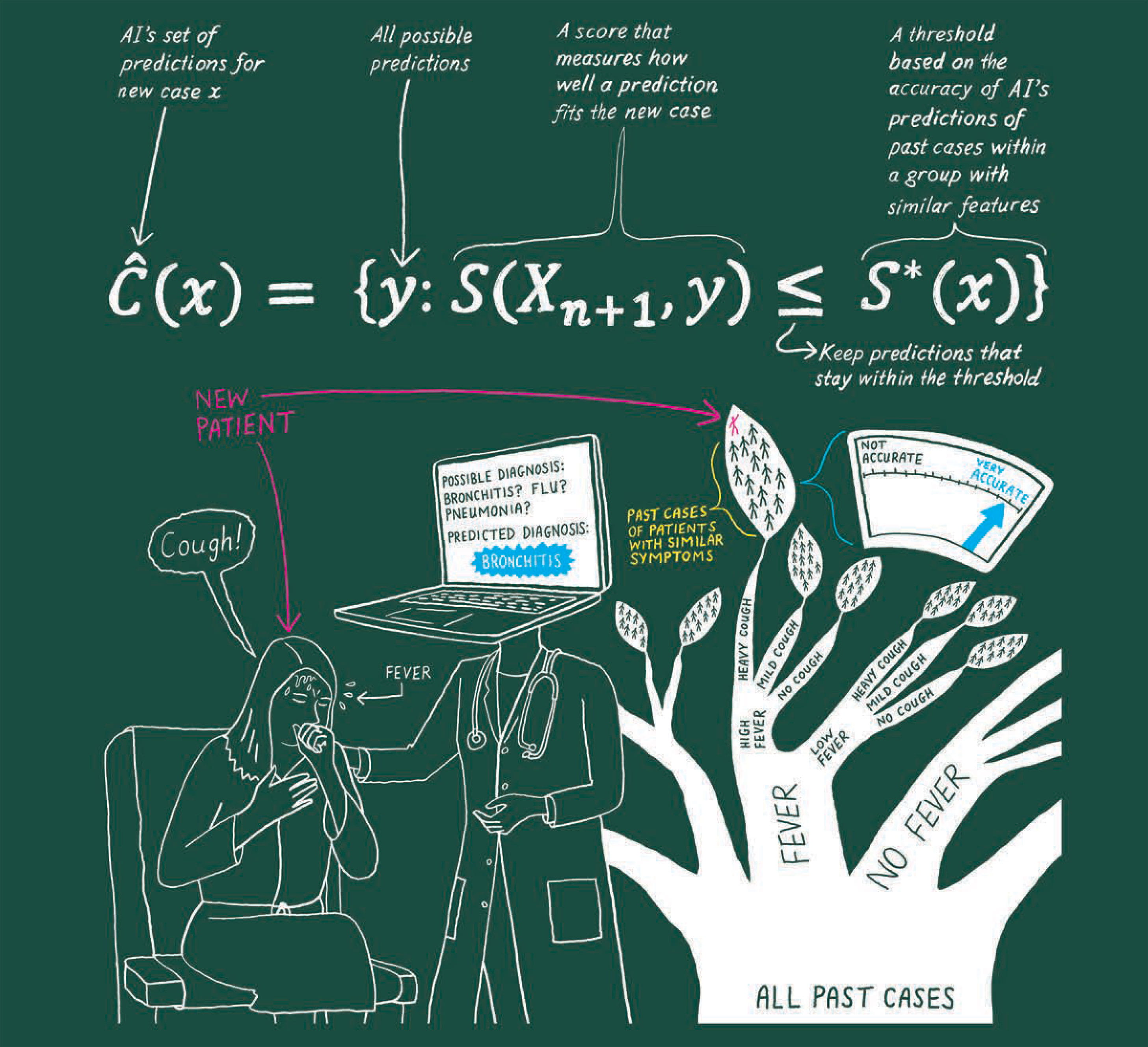
Illustration by Peter Arkle
Your Privacy
We want to demonstrate our commitment to your privacy. Please review Chicago Booth's privacy notice, which provides information explaining how and why we collect particular information when you visit our website.