CBR Briefing #23
- February 27, 2018
- CBR - Marketing
Why drug companies benefit when competitors advertise
TV commercials for branded medication boost demand for rivals.
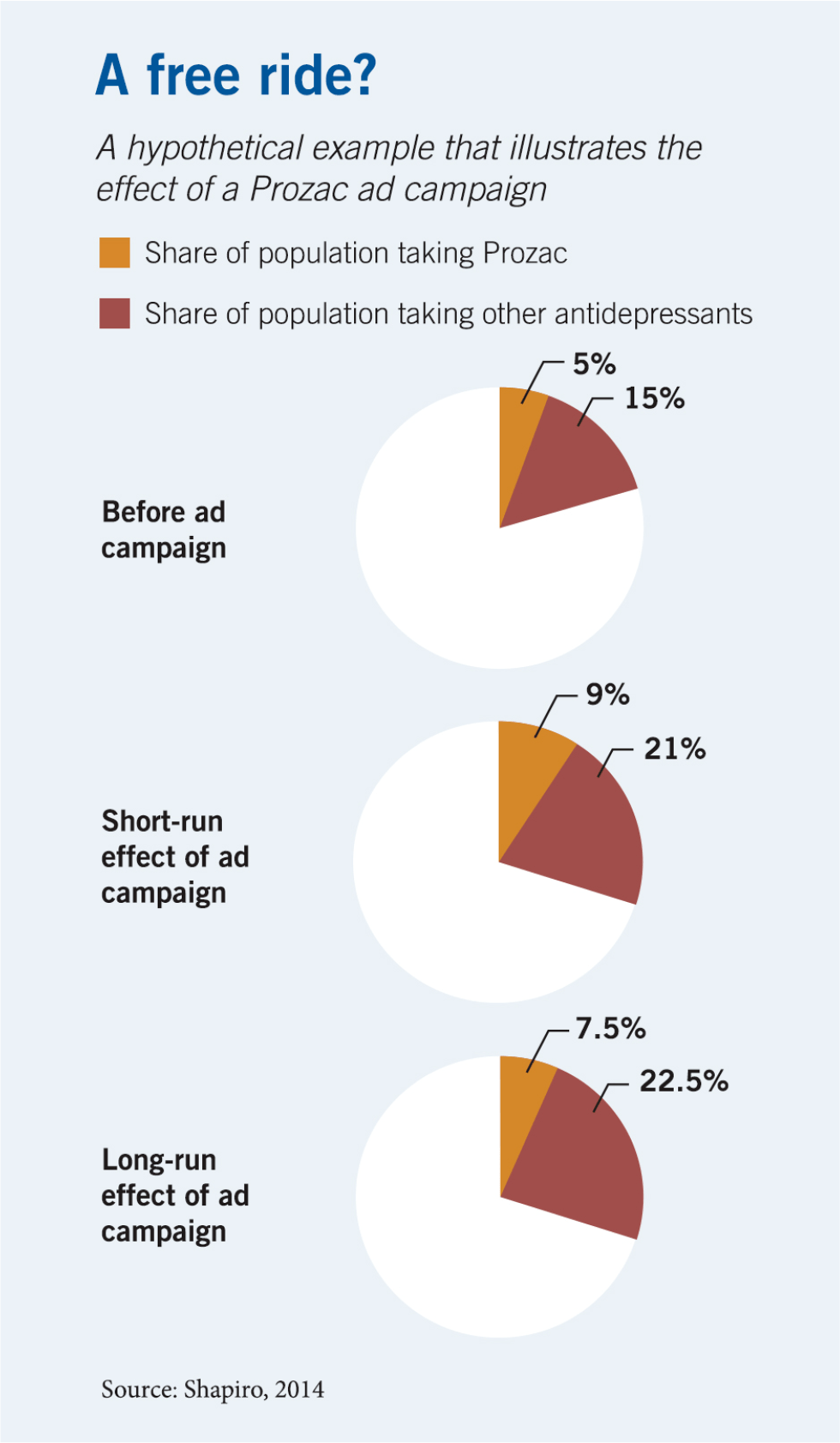
Ad viewers identify with the general health issue, increasing demand for a type of medication but not necessarily a specific brand.
- When a pharmaceutical company increases advertising for a drug, firms that sell rival medications tend to advertise less, acting like free riders, according to Chicago Booth’s Bradley Shapiro. That’s because drug ads on television increase sales not only for the promoted brand but also for those of competitors.
- US regulators require prescription drug ads to explain an ailment, as well as the drug’s method of treating it and the drug’s side effects—characteristics typically shared by drugs that treat the same condition. A viewer often identifies with the general health issue, increasing demand for a type of medication but not necessarily a specific brand.
- A consumer interested in a certain brand of drug must first see a doctor to obtain a prescription, which is another way drug ads can affect sales of other brands. While an ad could prompt a doctor’s visit, the doctor ultimately decides which brand to prescribe.
- In the case of antidepressants, Shapiro finds that while an ad campaign for Prozac, for example, increases market share of Prozac in the short run, this effect diminishes quickly (see chart). Nevertheless, in the long run, the overall market for antidepressants expands.
Bradley Shapiro, “Positive Spillovers and Free Riding in Advertising of Prescription Pharmaceuticals: The Case of Antidepressants,” Working paper, October 2014.
More from Chicago Booth Review
More from Chicago Booth
Your Privacy
We want to demonstrate our commitment to your privacy. Please review Chicago Booth's privacy notice, which provides information explaining how and why we collect particular information when you visit our website.