Is Conversation Magical?
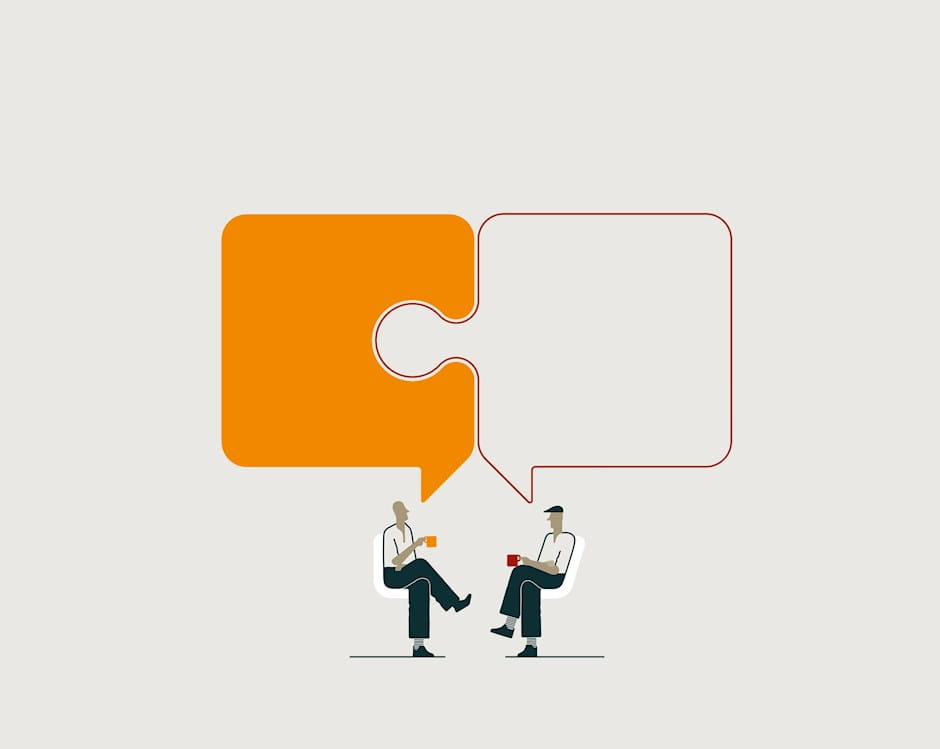
Conversations are much more than an exchange of information.
- By
- May 12, 2026
- CBR - Behavioral Science
Conversations are much more than an exchange of information.
When the anthropologist Bronislaw Malinowski traveled from his office at the London School of Economics to the Trobriand Islands of Papua New Guinea in 1915 to study “the savage mind,” he brought along many theories that he came to learn were wrong. One was about the purpose of language, and hence the function of communication. “Language, in its developed literary and scientific functions,” he wrote to emphasize this as a well-accepted fact, “is an instrument of thought and of the communication of thought.” Language, in other words, is meant for sharing information from one mind to another.
This made sense for many of the interactions that Malinowski observed, such as passing along instructions while hunting or farming, but it made much less sense for other interactions. At the end of a long day, for instance, the islanders would sit around a fire and talk about . . . well, mostly nothing. Despite not having much of substance to say, they still talked happily for hours. The dominant topics of conversation that Malinowski observed included “inquiries about health, comments on weather, affirmations of some supremely obvious state of things,” along with timeless chitchat classics like, “Ah, there you were.”
Was this seemingly useless gum flapping meant to pass along useful information? “Certainly not!” Malinowski wrote. Instead, language was being used to fulfill “one of the bedrock aspects of man’s nature in society”: connecting with other people. Spoken language wasn’t passing along useful information. In this case, it was passing along a hug.
Malinowski pronounced his discovery so profound that it required new terminology. “There can be no doubt that we have here a new type of linguistic use—phatic communion I am tempted to call it . . . a type of speech in which ties of union are created by a mere exchange of words.” Malinowski instantly recognized that this type of communication (phatic is derived from the Greek word phatos, or spoken) is exactly what British socialites did at cocktail parties, and it’s surely the same thing many of us do today when we chat in bars or in church or even on the phone. Somehow, though, the social function of spoken conversation had been overlooked by social scientists of the day.
Why was this a discovery? Wasn’t it obvious?
I think not. Even today, our research reveals that it’s easy for us to overlook how the dynamic processes involved in spoken conversation connect us in our everyday lives. Our social interactions unfold like a movie over time, connecting us through moment-by-moment forces that pull us together over the course of the conversation. Our expectations about how an interaction might unfold before it actually happens, however, are more like a photograph, focused on static features, such as whom we might be talking with or what topic we might be talking about. As a result, my colleagues and I consistently find that people in our research tend to underestimate how connected they’ll feel to someone after having a conversation with them.
When we fail to appreciate why conversation connects us, its power to do so can seem almost magical. It can also lead us to make mistakes when we choose how to connect with other people.
Conversation seems like it should resemble a tennis match: One person speaks, the other responds, and so on, back and forth with each side taking turns (“walkie-talkie” style, as researchers Gus Cooney and Andrew Reece rightly describe it). This back-and-forth volley is not, however, how a live conversation actually unfolds. When researchers put conversations under a microscope, recording every audible sound as a single turn in the conversation, what you actually observe is almost constant communication, more like a band playing together. When one person is taking the lead speaking, the other person is typically laying down the background rhythm in what researchers call backchanneling, the yeahs and uh huhs and right rights that keep a conversation moving along. When Cooney, Reece, and their coauthors analyzed 3,257 conversations between strangers, they found that the average length of each person’s speaking “turn” before the other person made a sound was only 6.4 words.
However, this background rhythm doesn’t stick in our memories, and barely even registers as an important part of a conversation as we’re going through it. But just as every musician knows, it’s the rhythm section that keeps a song moving even if the flashy lead singer gets all of the attention. Backchanneling is the sound that shows we care about what someone is saying and are paying attention. It’s also the sound we use to provide instantaneous feedback, making it clear when we understand (uh huh) or are confused (huh?), when we’re impressed (wow) or are surprised (oh?), and when we agree (yeah) or disagree (hmmm). Across the 3,257 conversations noted above, every single person backchanneled to some extent (once every 4 seconds, on average), and the more that backchanneling occurred in the conversation, the more the conversation partners reported liking each other.
The technological tools that allow us to connect with each other at a distance often trade live, real-time interaction for easier asynchronous interaction.
The other revelation from analyzing the precise details of conversations is how fast they unfold, going back and forth between speakers at lightning speed. When I call my dad on the phone to catch up and open with, “Hey, Dad, how’s it going?” he knows instantly that it’s his turn to step in and respond. When researchers time-stamp the moment one person stops talking and the other person starts, the typical gap is an astonishingly fast 200 milliseconds. Responding at eyeblink speed requires not only paying attention to what someone is saying but also predicting what they’re going to say before they even say it. A great conversation goes back and forth without an eyeblink’s delay because both people care so much about each other that they’re almost perfectly in sync, their minds tightly connected.
It won’t surprise you, then, that our brains are exceptionally sensitive to how quickly someone responds to us in conversation. Delays of even just fractions of a second can make it seem like the other person isn’t paying attention or is struggling to find what to say. In one series of conversation experiments, the longer it took a partner to respond, the less connected people felt to that partner and the less they enjoyed the conversation. The speed at which a conversation went back and forth was taken as a signal of their partner’s interest.
What really matters for how connected you feel in a conversation is not how fast you personally respond but rather how fast your partner responds. That response speed is taken as a sign of how interested and attentive your conversation partner seems to be in you. Live, synchronous interaction allows that responsiveness to shine through and therefore allows us to connect much better than asynchronous interactions like email, texting, or most not-so-social “social media.”
As important as synchrony is for our sense of connection, it’s easy to overlook this dynamic process when choosing how to connect in our daily lives. To see an example of this, consider an experiment in which Michael Kardas and I asked pairs of people to have a short interaction with each other. We gave them five topics they could use to introduce themselves, including where they’d like to visit in the future, what hobbies they enjoy, and what kind of music they like. We then varied how they would interact. In one case, people would have a dialogue with their partner (a live conversation). In another case, people would record a monologue for their partner in which they answered these questions, and then each person would watch their partner’s video answering the same questions. Notice that the dialogue condition contains all of the synchronous cues to responsiveness that connect people to each other, including backchanneling and turn taking, whereas the monologue condition contains none of them.
As clear as the benefits of dialogue over monologue might seem right now, they weren’t obvious to the people in our experiment moments before they were about to interact. As you can see in the figure below, people didn’t think that how they were connecting would matter, expecting to feel similarly connected after a monologue or dialogue. However, after the interaction was over, those who had a dynamic dialogue with someone actually felt more connected to their conversation partner than those who just watched their partner’s monologue. Although you’d be much happier getting to know someone by actually talking in conversation with them, not appreciating this beforehand might leave you choosing the ease of email or one-sided social media to connect with someone instead.
In an experiment, participants underestimated the closeness they would feel after having a conversation. That wasn’t as true for listening to a monologue.
We replicated these results in another experiment that goes beyond the simple niceties of phatic communion and gets to the heart of what all-too-painfully divides us across much of the world today: political disagreement. In this experiment, Kristina Wald, Kardas, and I paired up people who either agreed or disagreed with each other about a major political topic in the United States at the time (such as abortion rights, immigration reform, or support for Donald Trump) and asked them to either have a dialogue or to exchange monologues with their partner. As you can see in the figure below, our participants’ expectations about how positive the conversation would be were guided almost entirely by whom they were interacting with (whether they agreed or disagreed with the person) and not at all by how they were interacting with their partner (in a dialogue or monologue). However, actual experiences were so powerfully affected by how people were interacting that having a conversation with someone they disagreed with ended up being just as positive an experience, on average, as having a conversation with someone they agreed with.
Although participants didn’t expect it, they felt just as good after talking with someone who didn’t share their political views as they did after talking with someone who did.
If we don’t recognize the power of how we interact for determining how well our interactions go, then we run the risk of forming mistaken impressions about whom we’re interacting with. Indeed, when we randomly assigned people in another experiment to have a monologue with one person and a dialogue with another person, people felt that their dialogue partner was friendlier than their monologue partner. Objectively speaking, that simply can’t be true because how they interacted was randomly determined by a coin flip. More than that, when we asked who they’d rather be friends with in real life, more than half (54 percent) chose their dialogue partner while only a fifth (20 percent) chose their monologue partner. (The remaining 26 percent had no preference.) Not appreciating that how they were interacting was responsible for how connected they felt, people guessed that they would be more likely to become friends with someone they connected with through a conversation.
These mistakes matter because the technological tools that allow us to connect with each other at a distance often trade live, real-time interaction for easier asynchronous interaction. An email or text message can communicate ideas based purely on the words passed back and forth, but it lacks the rhythm that connects us. The “conversation” happening on X is not what happens when people have a real conversation with another person. Is it any wonder that social media can so often seem cold, cruel, and, frankly, antisocial? Online forums might be good places to find people to actually talk or have a dialogue with, but they’re bad venues for connecting us with each other.
Even tools that come very close to live conversation still can contain surprising shortcomings. During the COVID-19 pandemic, many people turned to video-chatting software like Zoom to stay connected during the time when we were being encouraged to stay physically distant from each other. But we also learned that nonstop Zooming could be exhausting, leading to an entirely new concept in human life—Zoom fatigue—and even a new word in Yiddish for the exhausting experience: oysgezoomt (pronounced “OYS-geh-ZOOMT”). One reason is that Zoom isn’t quite as synchronous as actual face-to-face interaction, and is more prone to transmission delays than even landline telephones. The delay isn’t long enough to derail a conversation, but it’s enough to turn what would be an otherwise pleasant interaction into an offbeat slog as you figure out when to talk and when your backchanneled right lands at precisely the wrong time.
Being wise about how to use any technology requires an understanding of its costs and benefits. The ease of technology that allows us to respond to each other via text any time at our leisure also comes with costs that are easy to overlook. Once you understand how dynamic processes create connection through conversation, you can make decisions and form impressions more wisely. You might shoot off an email or text a little bit less often and pick up the phone and call someone a bit more. You might also recognize that your oysgezoomt isn’t coming from the person you’re talking with, but rather from the medium you’re talking in.
The value of sitting down and talking directly with someone isn’t a new remedy for strengthening our connections and increasing our happiness. “Society and conversation, therefore, are the most powerful remedies for restoring the mind to its tranquility . . . as well as the best preservatives of that equal and happy temper,” wrote Adam Smith in 1759. What’s new is that in order to use this age-old remedy, you increasingly have to choose it.
Nicholas Epley is the John Templeton Keller Distinguished Service Professor of Behavioral Science and faculty director of the Roman Family Center for Decision Research at Chicago Booth. This essay is adapted from A Little More Social: How Small Choices Create Unexpected Happiness, Health, and Connection by Nicholas Epley, published by Alfred A. Knopf, an imprint of Knopf Doubleday Publishing Group, a division of Penguin Random House LLC. © 2026 by Nicholas Epley.
Your Privacy
We want to demonstrate our commitment to your privacy. Please review Chicago Booth's privacy notice, which provides information explaining how and why we collect particular information when you visit our website.